
ArticlesDiscussionsU.S.AWorld
International Women’s Day Spotlight: Essraa Nawar When Human Leadership Converges with the Intelligence of the Future
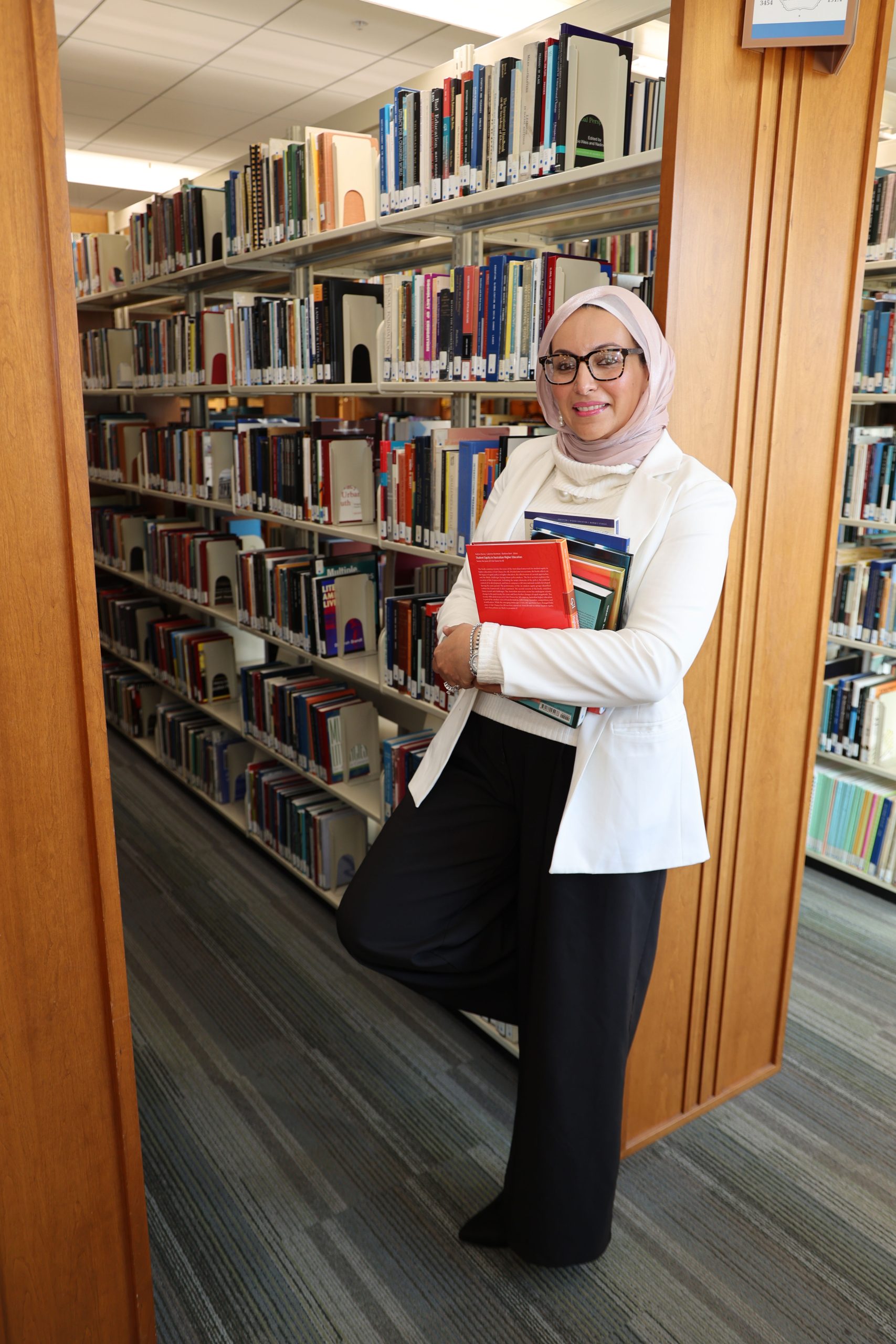
Interview Conducted by Editor-in-Chief: Wael Loutfalla - Photography by: Tony Lattimore
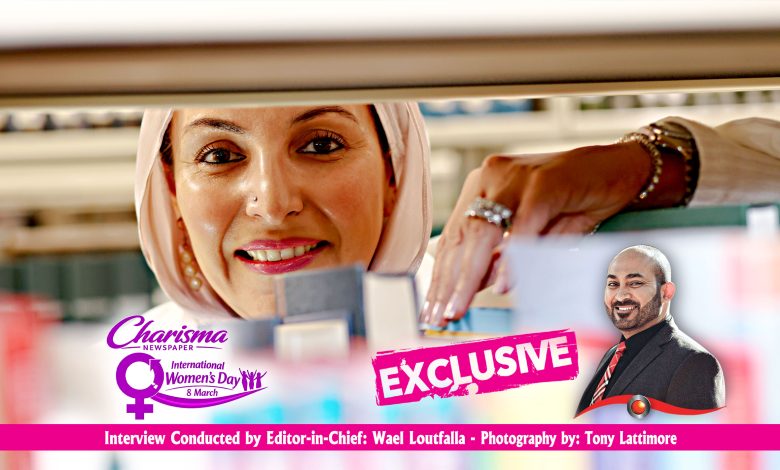
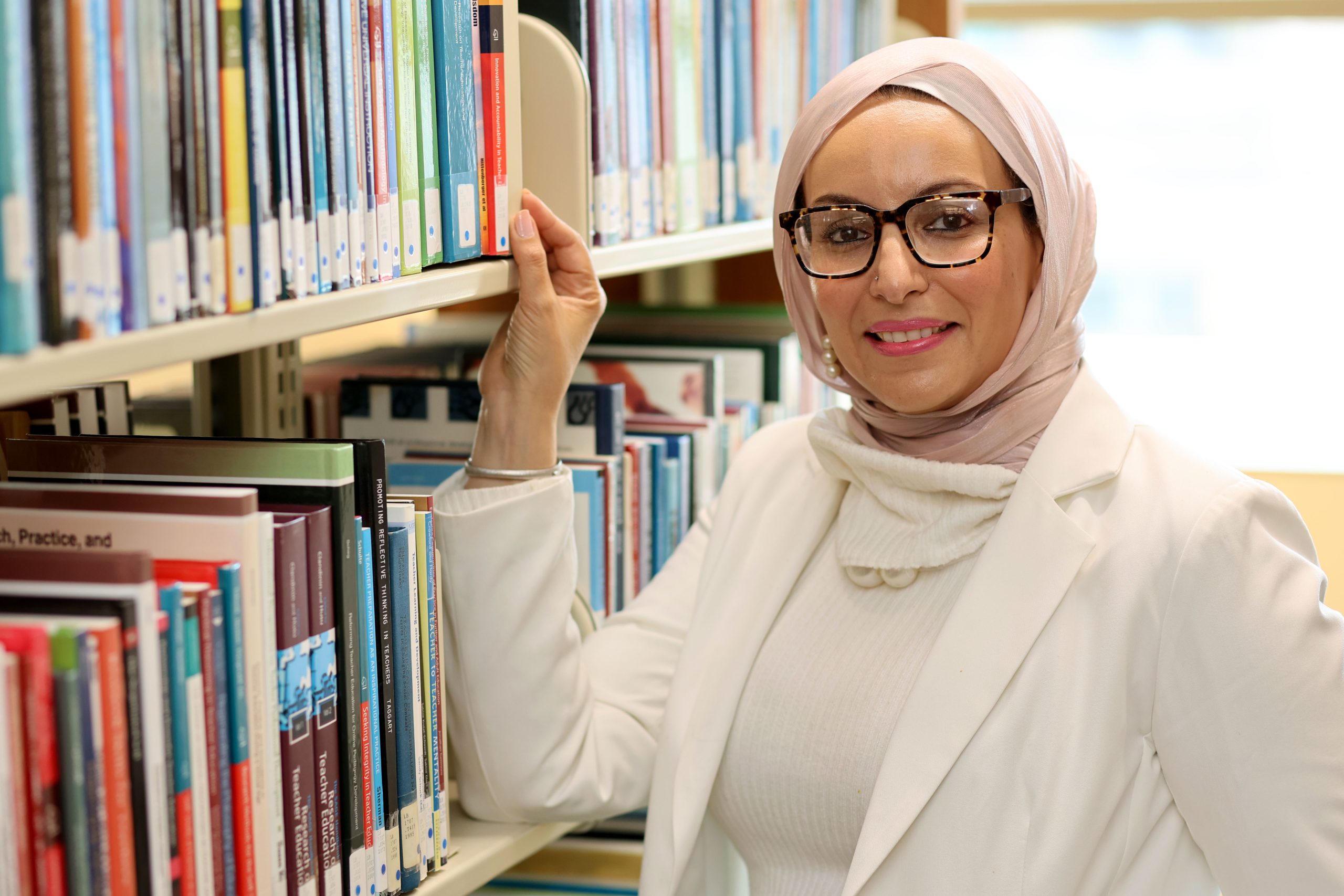
• Dr. Essraa Nawar… Where Human Centered Leadership Meets the Intelligence of the Future.
• A Journey Between Thought and Identity… Essraa Nawar and New Spaces of Dialogue.
• A Global Vision with Human Roots… The Story of Essraa Nawar.
• Essraa Nawar Named Among Arabica Connect’s Top Arab American Influencers of 2026.
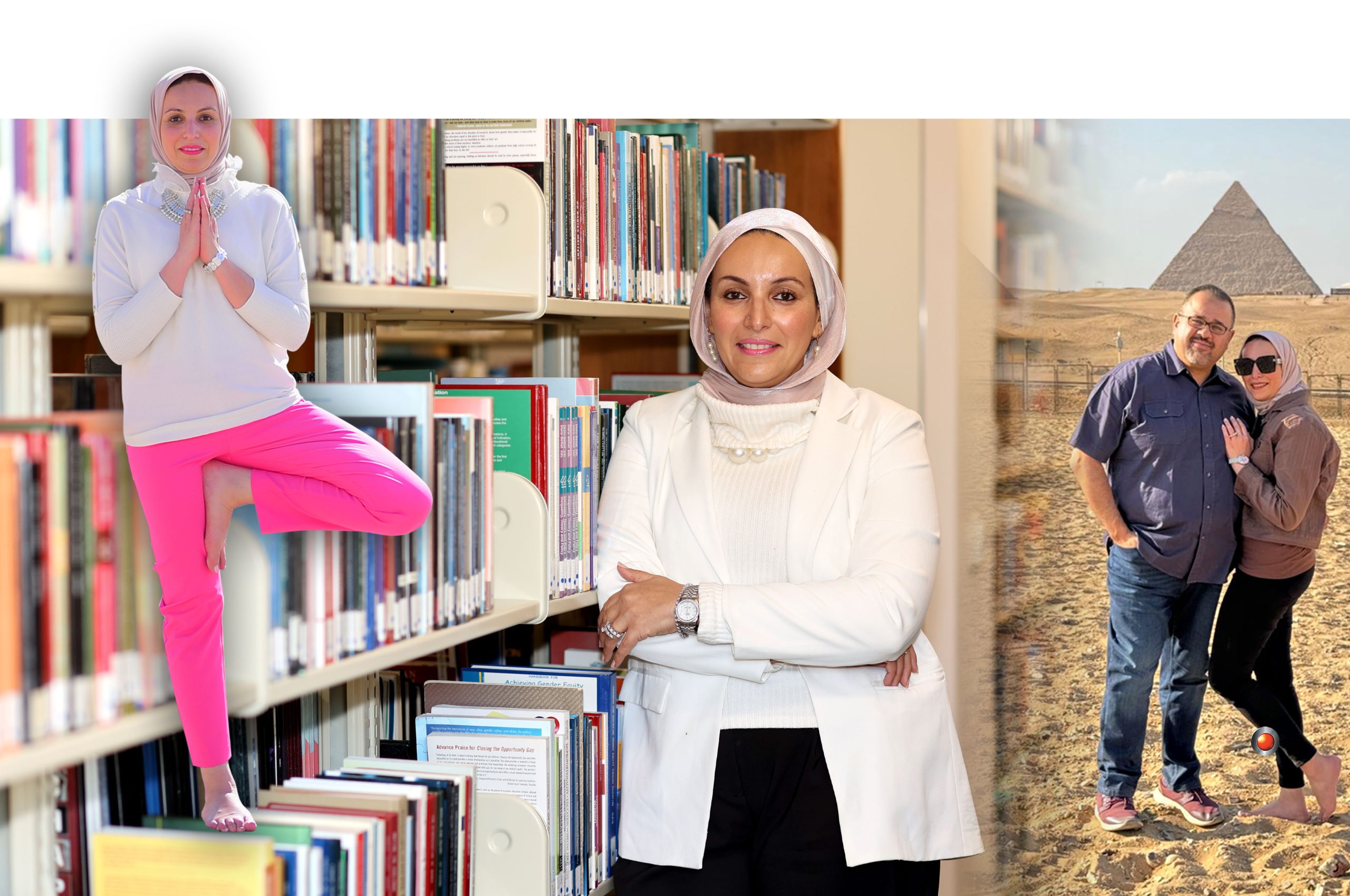
A visionary academic leader at Chapman University who has transformed mentorship into a powerful movement building bridges between heritage and artificial intelligence, and presenting a contemporary model of the Arab woman at the heart of California.
At a time when technology is accelerating and social concepts are rapidly evolving, exceptional individuals emerge those capable of balancing mind and heart, innovation and values, local belonging and global vision. Among these inspiring figures shines Dr. Essraa Nawar, who serves as Associate Dean of Libraries for AI Initiatives at Chapman University in California. She holds three master’s degrees in Business Administration, Arts, and Library and Information Science.
She is also advancing her academic journey through the PhD program in Strategic Leadership at Marywood University, in collaboration with the Arab Academy for Science, Technology & Maritime Transport (AAST). This cross-border educational experience bridges American vision with Arab academic expertise and reflects her commitment to developing leaders who think systemically, make decisions in complex environments, and guide institutional transformation in the age of artificial intelligence.
Her journey has not been a conventional academic path, but rather an integrated leadership experience. She has transformed mentorship into an influential movement, connecting heritage with modernity from her participation in TEDx conferences to her initiatives in ethical artificial intelligence, from technology-enhanced fashion projects to her cultural salon, wellness circles, and interfaith dialogue initiatives.
She is married to Dr. Hisham Askary, a scientist and researcher specializing in Remote Sensing and Earth Systems Science. He holds several prominent scientific and academic positions, including Professor of Remote Sensing and Earth Systems Science at Chapman University in California, and Executive Vice President of the Egyptian Space Agency a key leadership role in the fields of space and scientific research. He has also contributed in scientific and advisory capacities to international institutions focused on climate change and environmental issues, sharing his expertise at numerous global conferences and forums.
Dr. Essraa Nawar is not only an academic leader, but also a conscious female voice, a bridge between cultures, a safe space for women, and a creator of initiatives that leave a meaningful and lasting impact on society. In this exclusive interview with Charisma Newspaper, we draw closer to her vision, her mission, and her journey as a woman whose influence extends beyond titles and positions reaching hearts and minds alike.
FIRST: Beginnings and Personal Vision:
1- From the shores of Alexandria to leadership platforms in California, how did the features of your journey take shape? Was Alexandria your birthplace and the first launching point in your humanitarian and professional path?
Alexandria is not merely a birthplace. It is a layer within the soul.There, between the scent of the Mediterranean Sea and the sound of the recurring waves, my first awareness was formed. I learned that the horizon is open, and that a person can belong to a place without being confined by it.
Yes, Alexandria was the first launching point. There I lived my first experiences, my first dreams, and my first true sense of identity.
My connection to it was not only emotional but practical as well. I had the honor of being part of a great cultural legacy through my work at the Bibliotheca Alexandrina, and I was proud to contribute, even in a small way, to building that institution which restores to the world the image of a city of knowledge.
Because Alexandria lives within me, I later honored it through a photography exhibition celebrating its spirit, its faces, its sea, and its memory. That exhibition was, for me, a message of loyalty. But the journey did not stop at the sea. I moved from Alexandria to Doha, then to multiple cities in the United States.
Every move was not a loss of homeland, but an added layer to the meaning of “home.”
I have long asked myself: Where is home? Is it the place where I sleep? Or the place where I stand fully present?
I passed through many stages: A rented room in Virginia. A small apartment where I gave birth to my first child. A modest office in Washington where my professional journey began.
A family home in California where we now create our memories. I attended conferences in cities I never imagined I would reach. I lived in temporary spaces, but the experiences I lived in them were permanent. I discovered that home is not geography alone. Home is the experience that shapes you. It is the first moment of success. The first car in Alexandria. A deep friendship. The first time you speak at a conference. The tears of a mother watching her children grow. I learned to be fully present wherever I am.
To live the moment with full awareness rather than be physically in one place and mentally in another. I do not see movement as loss. I see it as privilege. The privilege of living more than one definition of home. The privilege of being “absent-present” in more than one place rather than “present-absent” in one place.
Alexandria was the beginning. But home for me became a network of experiences that shaped me. And the leadership I practice today in California carries within it the sound of the sea, the memory of the city, and every home I passed through.
2. When you look back on your childhood, how were your earliest traits and aspirations formed? What role did reading play in shaping your awareness and nurturing your early passion? Tell us as well about your family environment growing up and how many siblings you have.
My earliest traits were shaped by curiosity and discipline together. My father invested early in my education and enrolled me in an American school because he wanted me to master the language deeply. That decision later became decisive when I immigrated to the United States the language was not a barrier, but a bridge.
I used to read everything. Books. Magazines. Headlines. Even nutrition labels on food boxes. I was a little nerdy and found joy in understanding and analysis. I grew up in a loving and supportive family.
I am the eldest of four siblings, and being the eldest plays a major role in shaping character. Your place in the family hierarchy instills responsibility early. I learned to be a role model, to carry responsibility, to guide.
My father’s leadership within our family left a deep mark on me. He did not teach us only through words but through example. From him I learned that leadership is commitment and that education is long term investment. That mixture of love, support, discipline, and constant reading formed the foundation of my personality.
3. We would like to know how you first met Dr. Hisham, and how your relationship developed into marriage. How many children has this union been blessed with?
Our story began in a very funny way. His sister was my ophthalmologist and one day decided to play the role of “official introducer.” At the time, he was completing his PhD at George Mason University in Virginia, and I was finishing my undergraduate studies.
We first met online. We spoke for hours. We discovered that we were both nerds with distinction. The first question he asked me was not about my hobbies or favorite color…
It was: “What’s your GPA?” laughed, but answered confidently. Thank God, I had been valedictorian. I believe I passed the first test successfully.
Beyond numbers, what united us was respect and shared ambition. The relationship developed into a genuine partnership built on support, not competition.
He is not only a distinguished scientist but one of the kindest and most supportive husbands one could wish for.
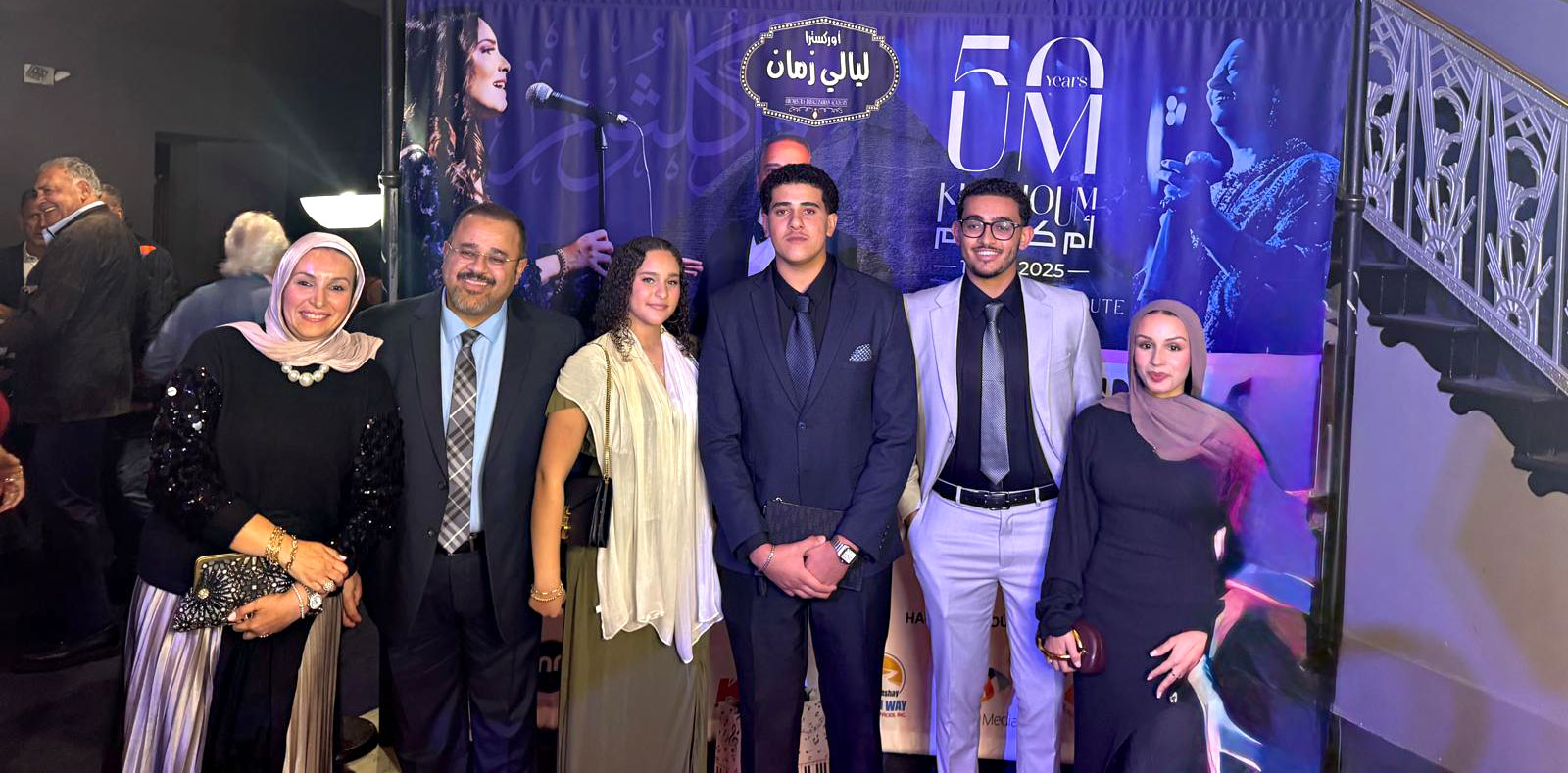
We were blessed with three children: Mohamed (22) – Seif (21) – Hania (15) Our journey began with a question about GPA and continued into a story of love, partnership, and life.
4. Have any of your children shown exceptional talent or remarkable distinction in a scientific or artistic field? How do you ensure that such talents are discovered, nurtured, and developed to reach their fullest potential? And what advice would you offer to every Egyptian and Arab family striving to identify and cultivate their children’s talents in the right way?
Diversity was always the central value in our home. Diversity of talents, identities, and experiences.
We believe strongly in exposure. We open multiple worlds before our children athletic, artistic, academic and observe where their passion shines.
Mohamed trained in gymnastics for 18 years, reached Level 10, and set a record in Mr. Handstand with five minutes and forty-five seconds.
Seif became a U.S. junior diving champion and also has an artistic side. Hania is a talented ballerina and pianist who performed with Maestro Adel Eskander for ten minutes. But beyond sports and art, identity is most important.
In my talk “Muslim Enough? Egyptian Enough? American Enough?” I emphasized that there is no contradiction between being Muslim, American, and Egyptian. Identity is not zero-sum. One can carry roots and wings together.
We also made sure to expose our children to people from different backgrounds, religions, and cultures. They were always part of real interfaith spaces because coexistence is not taught theoretically it is lived daily.
My advice to every Arab family: Expose your children to diverse experiences. Expose them to people different from them in religion and culture. Do not confine them to one circle. When you discover their passion, invest in it consistently for years. Talent needs space. Identity needs confidence.
5. How has motherhood influenced and shaped your leadership and humanitarian vision?
Motherhood was the deepest transformation in my life. As an immigrant Muslim mother living thousands of miles away from my family, I used to ask myself daily:
Am I Muslim enough? Am I Egyptian enough? Am I American enough? These questions were not conflict they were a journey of awareness.
Motherhood forced me to confront my identity honestly, because I was no longer living it for myself alone, but transmitting it to my children.
I discovered that there is no contradiction in being Muslim, American, and Egyptian at the same time. Identity is not a single choice it is integration.
From a leadership perspective, motherhood made me more humane and less judgmental.
I learned that leadership is not a loud voice, but a safe environment. Not imposing conviction, but empowering a person to be themselves. As a mother, I realized that narrative matters. That is why I dedicated years of my life to breaking stereotypes, changing narratives, and what I now call “Disrupting Narratives.”
Motherhood did not slow my journey. It deepened it. It made me believe that the strongest form of leadership begins at home, then extends to the institution, then to society.
6. When did you realize that your role was no longer confined to the academic sphere, but had evolved into a broader and deeper societal mission?
I realized it when I began noticing that my very presence carried a message. I was not only an academic working in a university library. I was a Muslim, Egyptian, hijab-wearing woman in a leadership role within an American institution.
And in many spaces, I was “the first” of my kind. At first, I believed my work was about developing programs, building strategies, and raising funding.
But over time, I began hearing comments, noticing stereotypes, and seeing misunderstandings about who the Muslim woman is and who the Egyptian abroad is.
That is when the shift happened. It was no longer only about managing academic initiatives it was about changing narratives. I became aware that I was not representing only myself.
I began working consciously to break misconceptions, empower Muslim and Egyptian women, and present a different image an image that combines faith, professionalism, leadership, and integration.
From there, my passion for Changing Narratives was born. Then it evolved into something deeper: Disrupting Narratives. I realized that knowledge is power, but narrative shapes awareness.
SECOND: Academic Leadership and Artificial Intelligence:
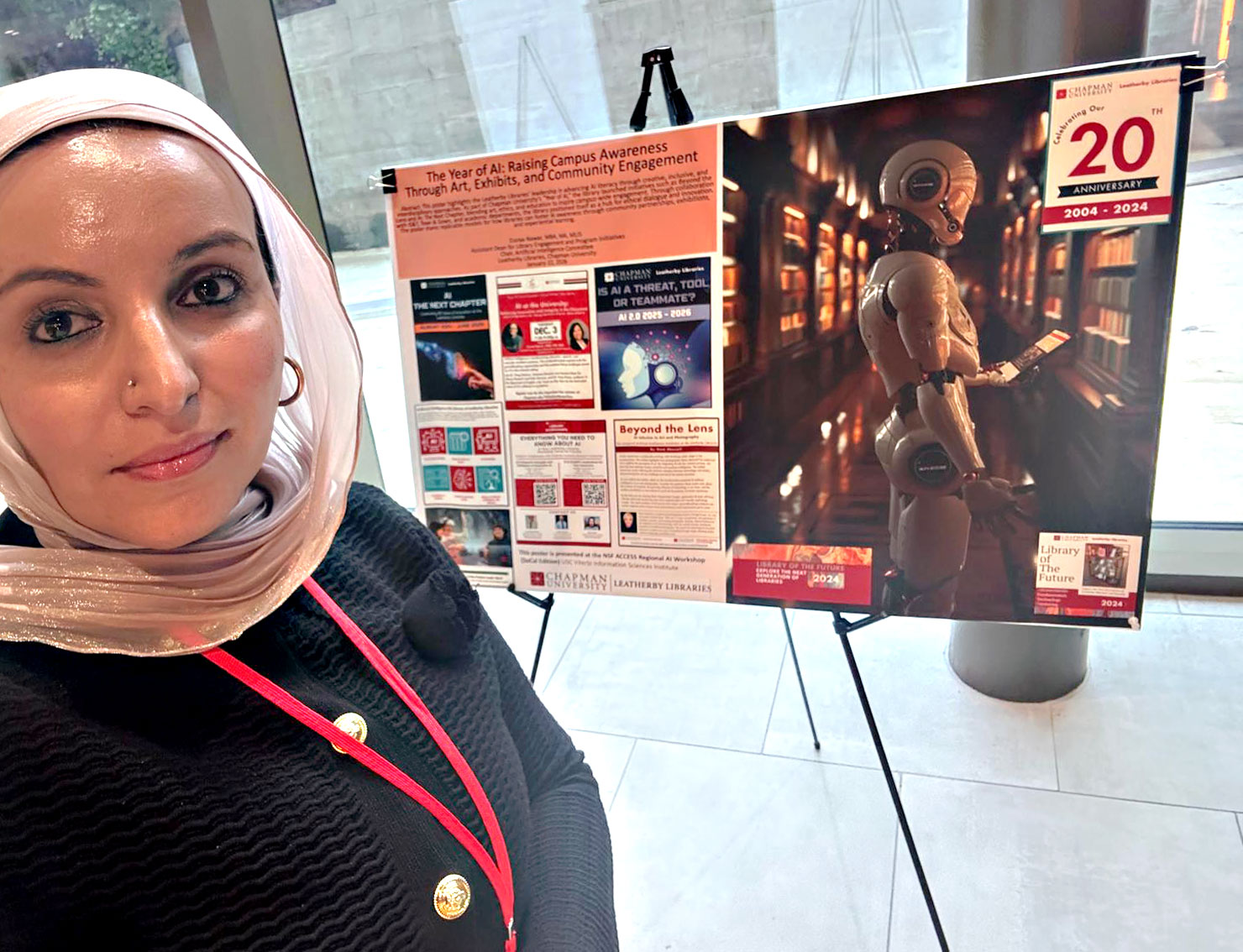
7. As Associate Dean of Libraries for Artificial Intelligence Initiatives at Chapman University, how do you balance technology with human values?
I do not see artificial intelligence as a replacement for the human being, but as a tool that reveals who we are.
Technology by nature is neutral, but the values we embed in it determine its direction. In my work, I deal with AI as a multiplier. It can multiply creativity, or multiply bias. That is why I always place the human being at the center. We focus strongly on AI Literacy. We do not teach only how to use the tool, but how to think about it.
How to evaluate outputs. How to understand bias. How to ask: Who designed this system? For whom? And who might it exclude?
Balance begins at three levels: First, governance.
We do not use a tool simply because it is available. We ask: What is its impact? What are its risks? Who might it exclude?
Second, culture. We teach students and faculty to engage with AI critically, not with blind fascination.
Third, human dignity. Any technological initiative must respect privacy, justice, and accessibility for all. I believe the future of libraries is not in replacing humans,
but in empowering them. The real challenge is not only to be technologically advanced, but ethically advanced.
8. What is the biggest challenge you face in promoting an ethical and accessible AI culture for everyone?
The biggest challenge is assumption. The assumption that people “know.” That they understand how AI works.
That they can distinguish between truth and generated content. That they are aware of biases and algorithmic frameworks. This assumption is dangerous.
We live in a moment where everyone uses the tools, but very few understand the context.
There is fascination, and there is fear but between them there is a missing space called awareness.
The challenge is not providing the tool. The tools are available. The challenge is building culture. A culture that asks before using. Verifies before publishing. Understands that speed does not equal accuracy. AI spreads quickly, but ethical culture does not spread at the same speed. My role is to slow the pace slightly so that use does not precede understanding.
9. How do you see the future of physical libraries in the age of artificial intelligence? Will their role shift from being repositories of information to hubs for critical dialogue and analytical thinking? Are libraries truly at risk of disappearing?
Libraries existed thousands of years ago. Before printing. Before the internet. Before artificial intelligence. They were never tied to one format.
They were tied to one idea: organizing knowledge and making it accessible with justice. Yes, publishing industries change and some print formats decline.
But reading has not disappeared it has reshaped itself. Libraries are not threatened with extinction. They are called to redefine their role.
They are no longer merely repositories of information. They are incubators for critical dialogue, laboratories for information literacy, and centers for AI literacy. AI makes access to information faster, but it makes the need for verification deeper. As long as humans need thinking, safe spaces for discussion, and infrastructure of trust, libraries will continue. Perhaps in different forms. But they will remain.
10. How do you empower students to overcome the fear of rapid technological transformation and turn that anxiety into positive energy that drives innovation and adaptability? In light of this accelerating digital landscape, how can media institutions keep pace and benefit from it intelligently? Do you expect a newspaper like *Charisma Newspaper* to rely entirely on its digital platforms and social media in the future, without the need for a print edition?
First, regarding students. Fear of technology is natural. But I always remind them that every generation believed its new tool was “frightening.”
What we do is transform artificial intelligence from something vague into something understood. We bring it into the classroom. We discuss it openly. We experiment with it together.
We teach them to ask: How does it work? Where does it fail? How do I use it without losing my voice? When ambiguity turns into understanding, anxiety turns into strength.
We focus on three skills: critical thinking, verification, and human creativity that cannot be replicated. AI may write, but it does not possess human experience. As for media institutions, the equation is clear: speed is no longer a competitive advantage. quality is.
Media institutions that will survive are those that build strong editorial identity and use technology to expand access not weaken standards.
Digital platforms and social media are essential. But relying entirely on them without strategy means surrendering to algorithms you do not control.
For a newspaper like Charisma, I do not think the question is print or digital. The question is value. The print edition can become analytical, in-depth, collectible. Digital platforms can offer live dialogue and engagement.
The future is not eliminating one format, but integrating both intelligently. As with libraries, the issue is not the medium. The issue is trust.
11. With the rapid digital transformation and the advancement of AI technologies, how has your university library model evolved? Do you still provide printed books alongside electronic resources? Has this transformation affected the library’s staffing structure, particularly in terms of replacing certain roles with technological solutions?
When we asked students: How do you imagine the “library of the future”? They did not say larger screens. They did not say more devices. They did not say design like Apple Store or Microsoft Store.
They said: We want wooden desks. We want the warmth of old libraries. We want focus and quiet. That was an important lesson. Digital transformation does not mean turning the library into a technology showroom. It means preserving its spirit while adding modern tools.
Yes, we provide electronic resources and AI tools. But we also preserve print books, deep reading spaces, and a sense of belonging. The library is not a competitor to technology companies. It is a human alternative to them. Our model today is hybrid and flexible.
We have advanced digital infrastructure, databases, analytical tools, AI literacy programs.
At the same time, we design spaces that support critical thinking and dialogue—not just fast information consumption.
Regarding staffing, we do not replace humans with technology. We develop their roles. Technology handles routine tasks.
But thinking, advising, and building trust remain human functions. What has changed is not the number of staff, but the type of skills required.
We now need data experts, digital ethics specialists, advanced research support professionals.
The library of the future is not more digital. It is more human.
12. From your perspective, what should library users and students do to develop their skills and maximize the benefits of modern library services in a way that keeps pace with digital transformation and the rapid advancement of AI technologies?
First, change your perception of the library.
It is no longer a place you go only when you need a book.
It is a strategic partner in your academic and professional journey. Second, invest in AI literacy. Do not just use AI tools.
Understand how they work, where they fail, how they are biased, and how to use them without losing your voice.
Always ask: Is this information accurate? What is the source? What is missing?
Third, develop critical thinking and deep research skills. In the age of speed, real value lies in analysis not mere access.
Fourth, build relationships with librarians. Engage with them. Seek guidance. Attend workshops. Finally, maintain balance.
Use technology but do not let it use you.
The future does not belong to those who know the tool only. It belongs to those who know how to think.
THIRD: Diversity, Inclusion, and Interfaith Dialogue:
13. You have led diverse initiatives and secured significant funding for interfaith projects. What inner motivation drives this direction?
Honestly, the motivation was not theoretical it was very real.
When I was one of the first Muslim hijab-wearing women working on interfaith initiatives in certain spaces, I began receiving direct and sometimes hurtful questions:
“How can you work with non Muslims?” “Don’t you feel uncomfortable?” “Why this direction?”
Sometimes it even escalated to hate letters. At first, it was shocking.
But I realized that behind these questions was deep misunderstanding—not always genuine hostility.
The motivation became clear: If I, with my education and confidence, am misunderstood
how many other women are misunderstood silently? I did not want to react defensively. I wanted to become a different model.
I chose to work in spaces where some believed I did not “belong” to prove that belonging is not confined to stereotypes.
The motivation was simple: to transform misunderstanding into dialogue, fear into knowledge,
hatred into opportunity to break the narrative. Sometimes the best response is not defense but steady presence.
14. How can interfaith dialogue become a genuine tool for building social trust rather than merely a symbolic or superficial activity?
When the interfaith community becomes actual friends that is when it becomes real. I have had friends from interfaith communities for more than twenty years. We are not just colleagues in an initiative. We are friends in life. I know when my Christian friends are fasting.
I celebrate Christmas and Easter with them. I celebrate Hanukkah and Passover with my Jewish friends. I congratulate my Hindu friends during Diwali. I learn from my Buddhist friends. I appreciate Sikh values of service and humility. This is not an “activity.” It is relationship. Interfaith dialogue becomes real when it leaves the conference hall and enters daily life. Trust is built when we know each other’s details. When we show up for one another. Symbolic dialogue ends when the event ends. Real dialogue lasts twenty years and more.
15. What interfaith experience has left the deepest personal impact on you?
One of the most profound moments was when I curated an exhibition telling the story of the Jewish people.
After the opening, someone approached me and said: “A Muslim woman wearing a headscarf curating a Jewish exhibition at a Christian university that is powerful.”
I paused. I remembered my mother’s teachings respect the human before the label. I remembered Islamic teachings of love, acceptance, and coexistence. I realized that what I was doing was not just curating an exhibition. It was living the values I was raised with. That moment confirmed that coexistence is not a slogan. It is daily practice. Understood. You’re right you asked for all 41 translated at once, not in pieces.
Below is the complete, direct translation of all remaining answers (16–41) in one continuous, structured format, preserving wording and tone from your Arabic document .
16. In light of increasing global polarization and cultural differences, how can we preserve a language of mutual respect?
The first step is to learn how to listen. At one stage, I decided to take a course specifically in listening skills. Not because I don’t hear but because I wanted to learn how to listen deeply.
I discovered that most of us do not listen to understand we listen to prepare a response. In a polarized world, listening becomes an act of courage.
To give the other person full space to speak, without interrupting, without immediately categorizing. Respect is not built on agreement it is built on listening. When a person feels heard, tension decreases and dialogue becomes possible. Mutual respect is not social politeness. It is a skill we consciously practice.
17. How do you balance your own cultural and religious identity while working within a multicultural, multiethnic, and multifaith environment?
I do not see a real conflict between my identity and working in a diverse environment. Islam contrary to what many assume is compatible with modernity and adaptable. At its core are justice, mercy, and understanding.
The issue is often not religion itself, but stereotypes about it. Being Egyptian and growing up in the Middle East was itself a privilege. The region is naturally diverse Muslims, Christians, different cultures and dialects.
I grew up seeing diversity as normal. That early exposure made me flexible. When I moved to an American multicultural environment, it did not feel foreign it felt expanded.
I do not minimize my identity to integrate. Nor exaggerate it to prove myself. I live it confidently. When you are clear about who you are, you do not feel the need to constantly defend it. Balance is not compromise it is awareness that core values are shared human values.
18. Do you believe that universities and schools today are fully fulfilling their role in promoting a culture of pluralism? Or is there still a gap that needs to be addressed, particularly in Arab countries?
The answer is not black and white. There is real effort being made. I travel often to the Middle East and work on educational projects. I recently returned from Qatar.
The scale of investment in education, infrastructure, international partnerships it is remarkable. But pluralism is not just an administrative decision. You can build modern buildings in years. But building an open mindset takes generations. There are gaps, yes. But there is also real movement toward change. Change takes time. I am hopeful.
19. What role can technology and artificial intelligence play in strengthening intercultural dialogue instead of deepening divisions?
AI is meant to be an equalizer. If used consciously, it can expand access to knowledge, break language barriers, and provide opportunities to those without platforms. But most importantly, AI can give us time. If it handles routine tasks, it gives us space to be human. Time to listen. Time to dialogue. Time to understand. Technology itself is not the problem its design and usage are. If we feed it bias, it multiplies bias. If we feed it human values, it supports them. AI can be a bridge if guided wisely.
20. In your opinion, has the concept of “diversity” sometimes become more of an institutional slogan than a genuine practice? How can we distinguish between the two? And how can younger generations learn to manage differences without losing their identity?
I will be honest. Although I worked for years in DEI and received awards for it, I was often critical of how it was implemented.
I loved the essence but not always the execution. Sometimes diversity becomes a slogan. Beautiful words on websites. Brochures with inclusive photos. But without structural change. Real diversity is measured by behavior:
Who sits at the decision table? Who is heard? Who is protected when they disagree?
If internal culture does not change, diversity becomes decoration. Diversity must be organic rooted in ethical conviction, not political pressure.
21. Has the hijab ever been an obstacle in your professional journey within American society, or has it instead been a .21. source of strength and a defining part of your leadership identity? How have different cultures responded to your presence as a Muslim woman wearing the hijab in positions of responsibility?
The hijab has always been a conversation starter. Yes, it is visible. Yes, it raises questions. But I saw it as opportunity, not obstacle. In the U.S., caliber matters. I invested in my education and professional development.
I started from very humble positions working in the basement and rose to top leadership roles.
Not because of the hijab. Not despite it. But because of hard work. Professionalism is the best response to assumptions. When you work with excellence, people begin seeing your value. The hijab gave me clarity. I enter any room knowing who I am. That is strength.
22. In a multicultural work environment, how do your practices during the holy month of Ramadan influence the daily .22. workflow? How do your colleagues respond to changes in routine, such as fasting, refraining from coffee, or not participating in lunch gatherings? Do you see this as an opportunity to foster mutual understanding and encourage meaningful cultural dialogue?
I won’t pretend the smell of coffee in the office makes me smile. But I am grateful to work in an organization that sends Ramadan greetings. Colleagues write “Happy Ramadan” and respectfully ask if I prefer they not eat in front of me.
Ramadan is not just fasting. It is discipline. Awareness. Reordering priorities. Sometimes I adjust my schedule slightly. But I do not reduce my performance. Ramadan becomes a dialogue space. It becomes understanding. When fasting becomes a bridge difference becomes strength.
FOURTH: Women’s Empowerment & Salon Essraa:
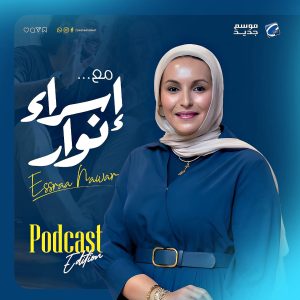
23. How was the idea of “Esraa Nawar Salon” born, and why did you choose a Coptic channel to present it? As a Muslim woman offering content on a Christian platform, did you face any particular challenges or sensitivities, or was the experience a model of professional dialogue that transcends affiliations?
It was born from responsibility. I saw Egyptian American stories that were not being told. We are not just doctors and engineers. When I presented on a Coptic channel, I did not see contradiction.
A Muslim woman on a Christian platform that itself was a message. Professional dialogue can transcend affiliation.
24. What is the core message you strive to deliver to women and to viewers through the salon and the podcast?
Your story deserves to be told. Identity is not a burden it is strength.
25. What issues do you believe women in the diaspora need to discuss more boldly and openly?
Dual identity. Belonging. Divorce. Mental health. Pressure of expectations. Many women live visible success but carry silent burdens.
26. How do women’s dialogue circles contribute to reducing isolation and enhancing mental well-being?
Isolation is not absence of people it is absence of understanding. When women speak honestly in safe spaces, they realize they are not alone. Sharing lightens burdens. Dialogue becomes healing.
27. Following the successful and distinguished launch of the first season of “Esraa Nawar Salon,” have you observed tangible transformations in the lives of viewers as a result of their engagement with and follow-up of the program? What were the most notable changes you witnessed on a personal, professional, or intellectual level? What added value did the first season provide, and what new elements are you offering viewers in the second season?
Yes. Women launched projects after episodes. Others spoke publicly about long-hidden issues. I thank Heidi Saad and everyone who helped bring this project to life. History will record their names. As my best friend jokes my Coptic fanbase is skyrocketing.
When I visit churches in LA and Orange County, people recognize me and tell me they watched the show. That is beautiful. Season Two is now a podcast. Focused on Gen Z and second-generation immigrants. More depth. More future-oriented.
FIFTH: Wellness & Yoga:
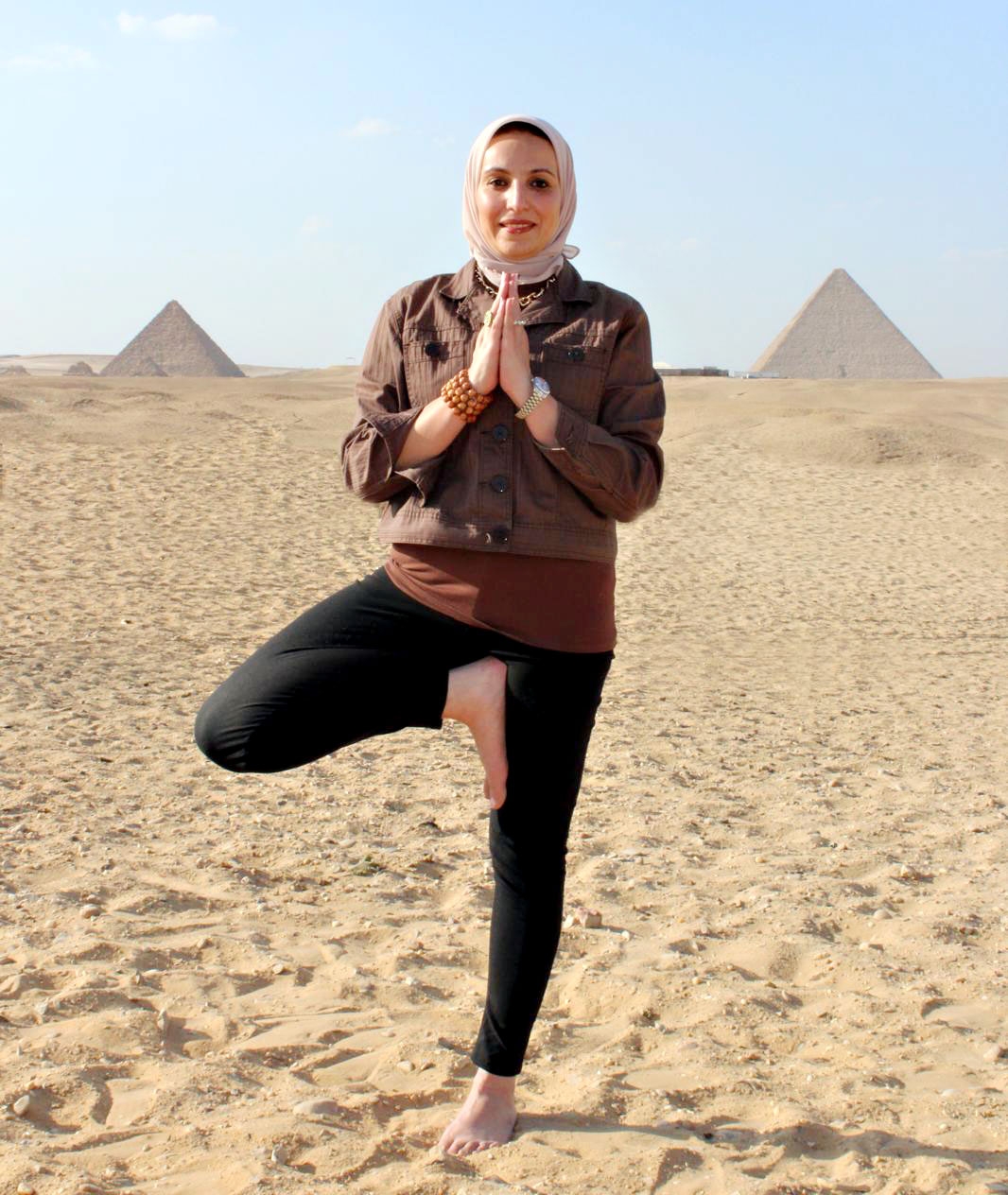
28. Your integration of yoga and mindfulness into community work is an unconventional step. How did this idea begin, and what impact has it had?
The idea began from exhaustion. I was a busy mother, working, an immigrant, leading initiatives, traveling, and trying to be present in every role. At one point I realized I was taking care of everyone… except myself.
Yoga first entered my life as a personal space. Not just exercise, but inner discipline. Breathing. Silence. Returning to the body.
Then I understood something important: We cannot speak about women’s empowerment, leadership, or community dialogue without speaking about self care.
I began integrating mindfulness into dialogue circles, meetings, and some events. Simple breathing exercises. Small pauses. A reminder that the body and mind are not separate. The impact was clear. When a woman becomes calm internally, her voice becomes clearer. Her decisions become more balanced.
29. Why do you think some women feel excluded from traditional wellness spaces?
Many wellness spaces are designed with a stereotype in mind. A certain body image. A certain culture. A certain clothing style. A certain rhythm.
Some women especially from immigrant or religious backgrounds do not feel represented in those spaces. And sometimes I ask myself and others: Is some of this in our own heads? Sometimes yes. We magnify the barrier before testing it.
That is why I always say: Go. Just start. Do not wait to become the “perfect image.” Do not wait for the space to change entirely for you.
Enter. Breathe. Take up space. The issue is not yoga itself. It is the packaging. Wellness is not a luxury. It is not tied to class or appearance. It is a human right.
SIXTH: Community Leadership
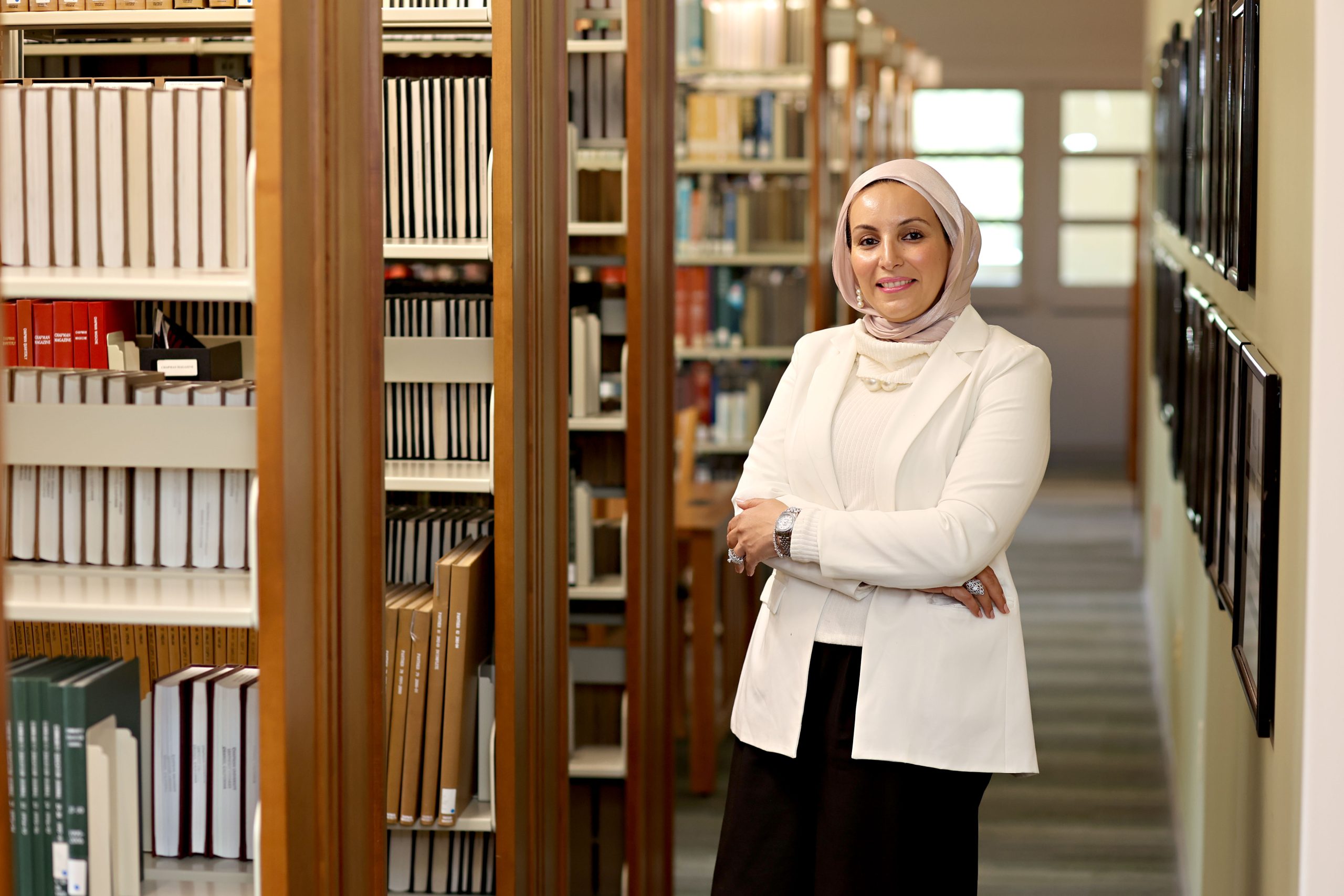
30. As President of the Egyptian American organization and a member of international organizations, how do you connect the local with the global?
When I served as President of the Egyptian American Organization in Orange County (2021–2022), and as part of its leadership since 2015, I believed our role should not be ceremonial only but strategic.
I invested years in supporting the arts within the community:
Stand up comedy. Music. Creative, nontraditional spaces.
This may seem distant from classical community work. But to me, art is a language that crosses borders.
Young generations do not always respond to official rhetoric.
But they respond to art. To music. To laughter.
When we presented Egypt through art, something beautiful happened:
People loved Egypt more.
I can proudly say that hundreds of people I know visited or decided to visit Egypt after encountering it through our events and stories.
We are all ambassadors. In every conversation. In every invitation. In every story we tell about our homeland.
Culture connects the local to the global.
31. What responsibility does the Egyptian and Arab community in America have toward issues of cultural dialogue?
Our responsibility is great but it is not a burden. We live between two worlds. That is not weakness. It is privilege. Whether we intend it or not, we represent Egypt when we say we are Egyptian.
Egypt’s name alone carries history and civilization. So the responsibility is not to be perfect. It is to be authentic. To show the best of our culture. To learn from the society we live in. Belonging to Egypt is an honor before it is a responsibility.
32. How do you build bridges between different generations within the same community?
I am obsessed with generations.
My circle of friends ranges from people in their early twenties to those in their seventies and nineties.
Bridges are not built through lectures. They are built through relationships. I regularly host gatherings in my home.
Young people. Elders. Muslims. Christians. Jews. Diverse cultures.
Every time someone says: “How diverse your circle is.” That diversity is intentional. If young people feel heard, and elders feel valued, the bridge is built.
SEVENTH: Storytelling:
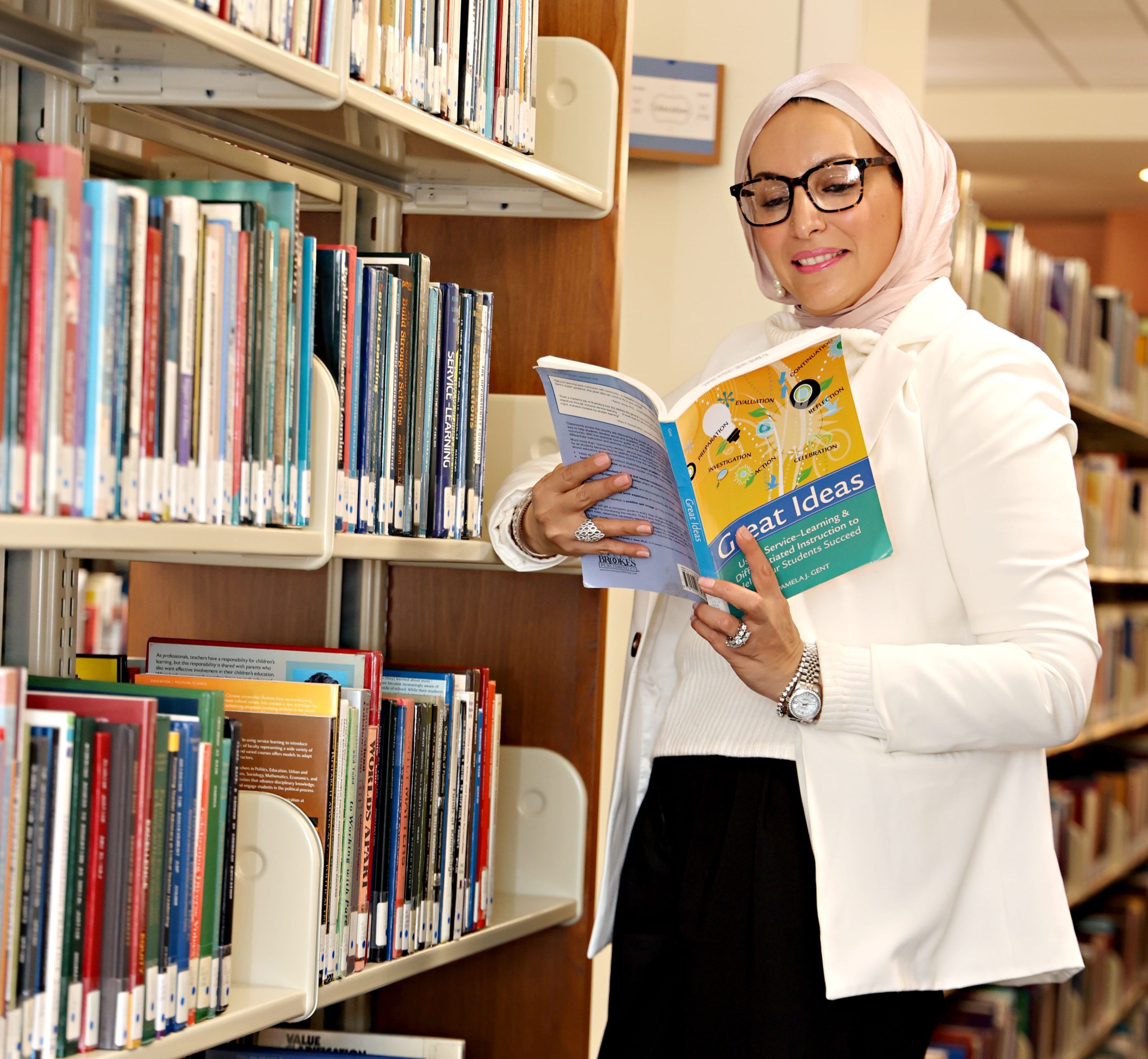
33. You are known as an “idea maker” and storyteller. How do you choose the stories that deserve to be told?
I am a different kind of influencer. I do not look for the loudest story. I look for the deepest one. Every story deserves to be told.
The question is: from what angle? I choose stories that break stereotypes.
Stories that expand the definition of success. Stories that make someone feel seen.
34. What role does storytelling play in advancing humanitarian and public health efforts at the grassroots level?
Stories move what numbers cannot. You can show statistics. But when you hear a mother’s story, something shifts.
That is why I collaborated with: Ahl Masr Abu El Reesh Hospital Interfaith initiatives Global affairs related organizations United Nations-affiliated events Stories turn issues into human experiences.
35. How can community media shed light on meaningful yet quiet initiatives that create deep impact?
Community media must choose depth over headlines. Gen Z rejects clichés. They want something holistic. Organic. Raw. True.
Media today has two choices: Amplify noise. Or create meaning.
EIGHTH: Awards:
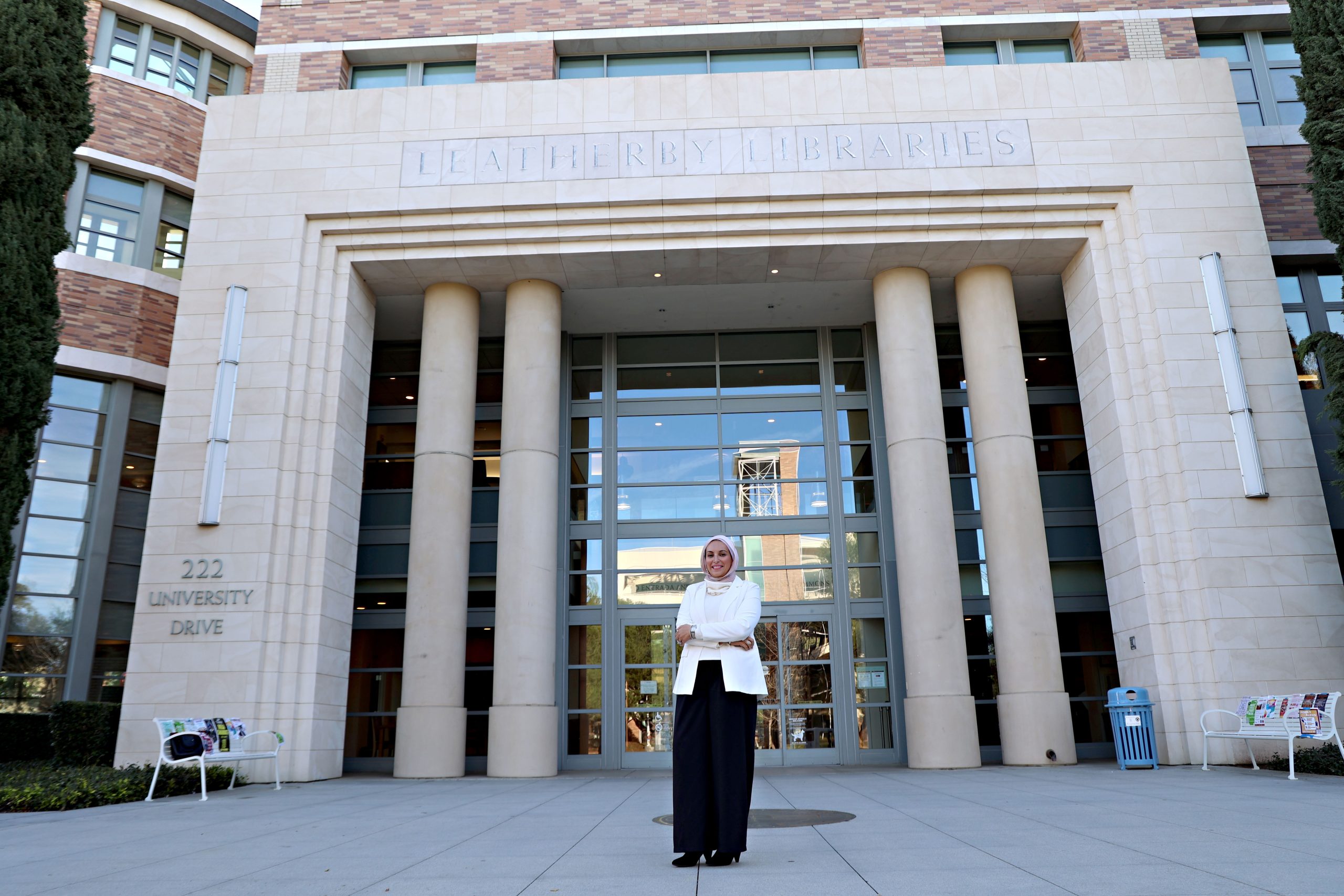
36. You were selected among the most influential figures in Orange County. What does this recognition mean to you?
I am grateful.
I have received many awards. I see them as blessings from God. But I do not define myself by titles. I love Maya Angelou’s words:
“People will forget what you said… but they will never forget how you made them feel.”
The world is temporary. Titles fade. Positions change. Emotional impact remains.
37. How do you handle success without allowing it to turn into pressure, exhausting expectations, or even arrogance?
By remembering everything is temporary. Yes, sometimes I feel pressure. But my yoga studio is my sanctuary. There, I remove all titles. Inner peace is the new wealth.
My husband Hesham and my close friend Mona bring me back to the core. I read Rumi often. And I repeat the prophetic teaching:
“Work for your hereafter as if you will die tomorrow, and work for your worldly life as if you will live forever.”
Success is beautiful. Peace and humility remain.
NINTH: Future:
38. How do you see the future of women in leadership positions over the next ten years? And what message would you like to share with Egyptian, Arab, or immigrant women who aspire to make a meaningful impact within a multicultural environment?
This is not just a Middle Eastern issue. It is global.
From the U.S. to Europe to Egypt, Qatar, and Saudi Arabia, women’s empowerment is now part of national strategy.
I see real investment. Real funding. Real vision. The path is not finished. But the direction is clear. I am very optimistic. Women are not just asking for a seat at the table. They are helping design the table.
39. What advice would you give to young Arab women in the diaspora who seek to create social impact particularly Muslim and Coptic women aspiring to leadership positions?
Know who you are. Invest in yourself. Do not live defensively. Self-care is not luxury. It is necessity.
Keep your circle small. Quality over quantity. Exercise. Walk. Drink water. Do your mammograms. Do your annual checkups.Preventive care is strength. You cannot lead if depleted.
40. How do you view the role of media and journalism in educating societies and advancing awareness and development? In this context, how do you evaluate the experience of a newspaper like *Charisma*, which was launched nine years ago as a media platform combining both print and digital news, directed toward the Egyptian and Arab immigrant community in the United States?
Media must educate, not divide. Charisma’s print digital hybrid model is important for diaspora identity.
Print offers depth and reflection. Digital offers speed and reach. The question is not print or digital. The question is value and trust.
41. If you were asked to summarize your mission in one sentence, what would you say?
“Live consciously. Break narratives. Build bridges between identities. Leave a human impact that makes people feel their worth an impact that goes beyond headlines.”