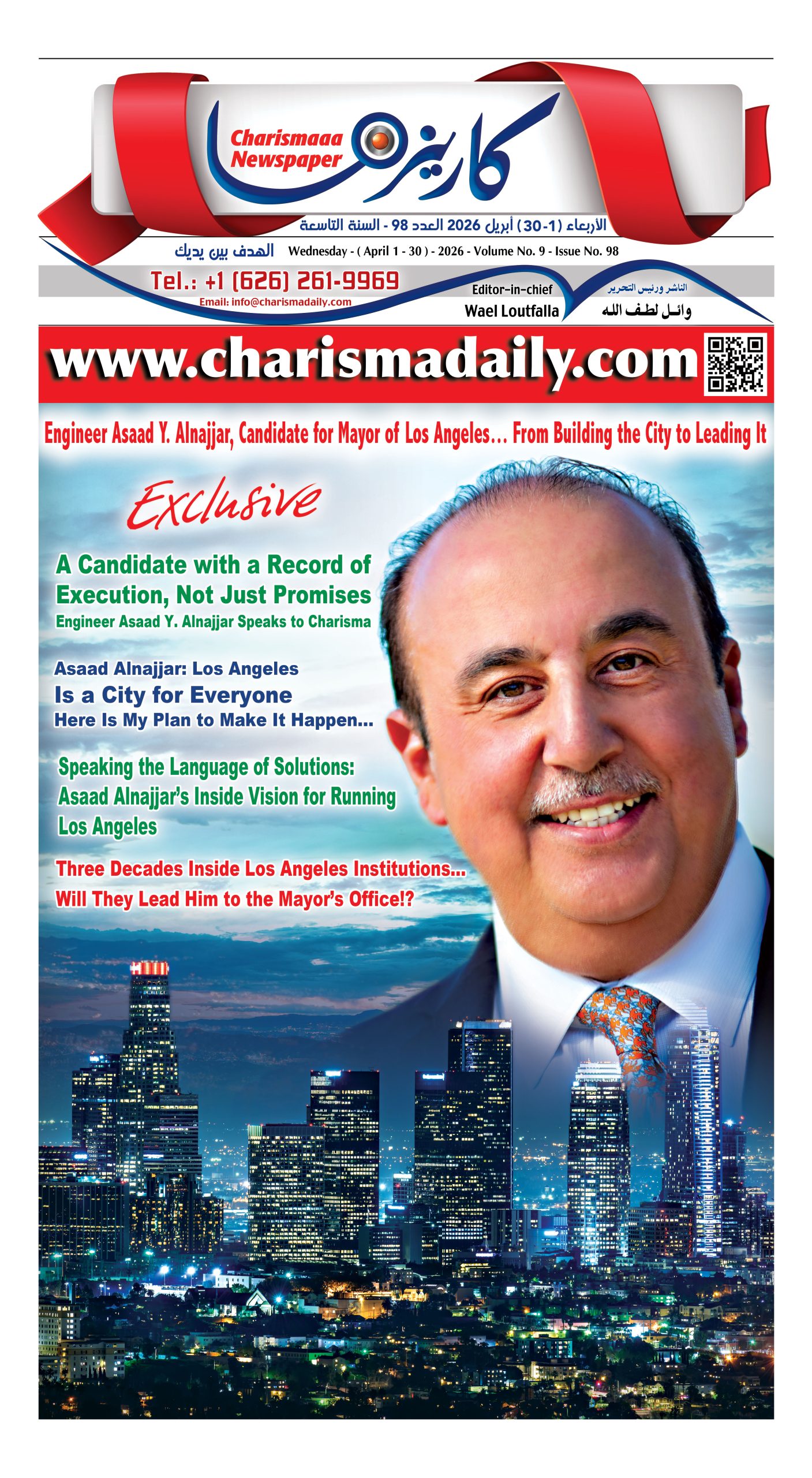

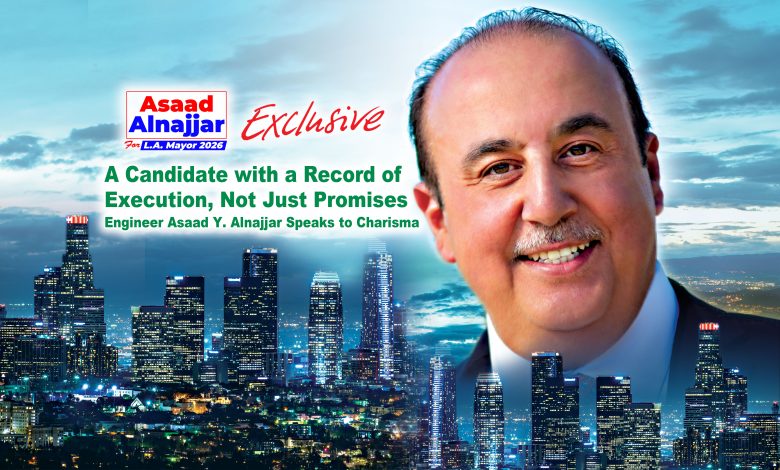
LA Mayoral Candidate Asaad Alnajjar: Addressing Homelessness and Rebuilding Infrastructure Are Top Priorities.
Asaad Alnajjar in an Exclusive Interview with Charisma: Los Angeles Can Become a Global Model for Modern Cities.
Asaad Y. Alnajjar… Deep Engineering Expertise and a Leadership Vision for the City of Los Angeles.
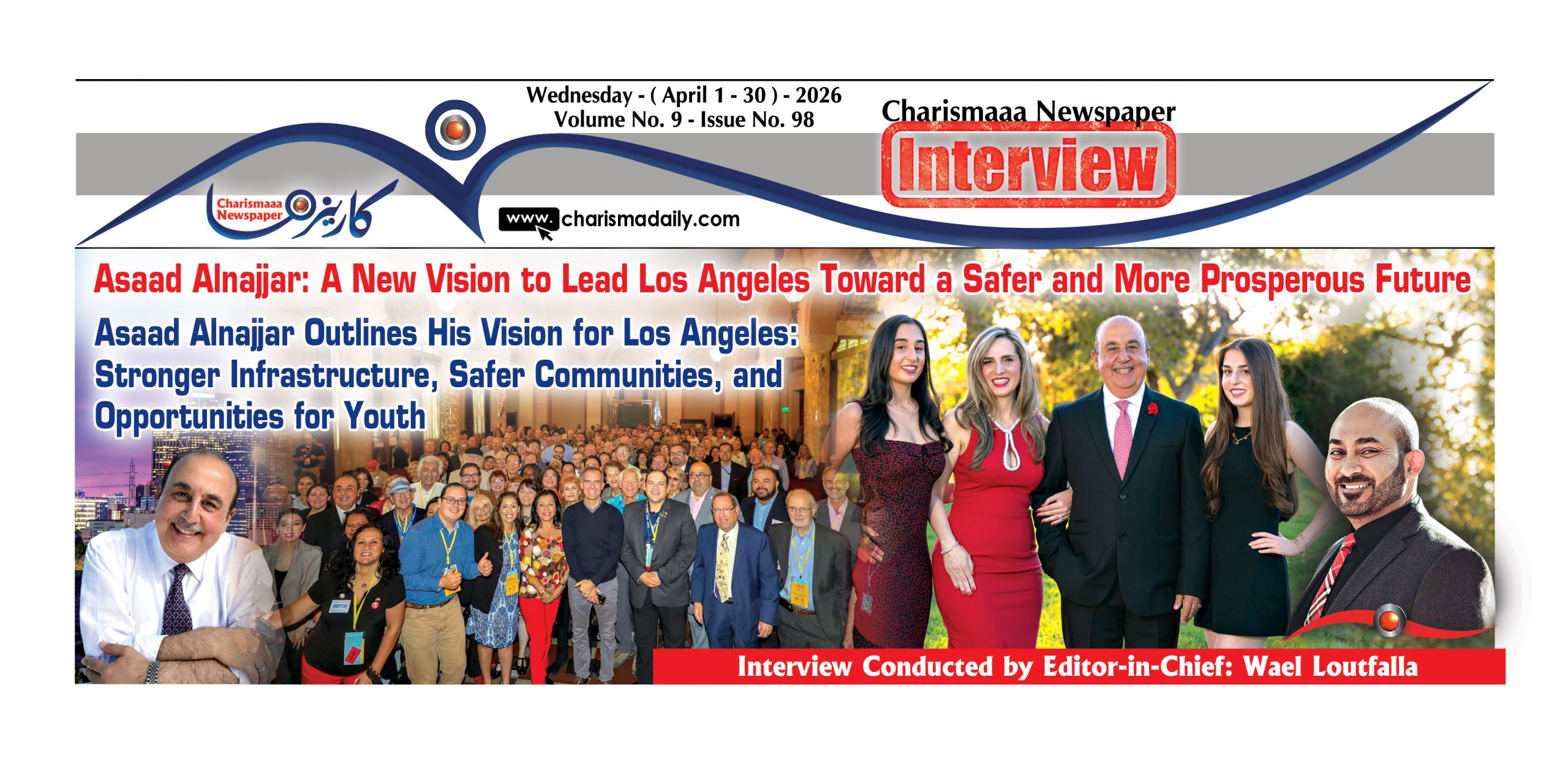
In a city as vast and complex as Los Angeles where issues of infrastructure, transportation, housing, public safety, and municipal services intersect leaders who combine deep technical expertise with a clear strategic vision are essential to turning plans into tangible results. Among those distinguished figures stands Engineer Asaad Y. Alnajjar, one of the most prominent engineering professionals who has served the city for more than three and a half decades within the framework of public works and major transportation and infrastructure projects.
Alnajjar is of proud Iraqi Arab heritage and is widely recognized among colleagues and municipal leaders for his values of integrity, honor, and professional accountability. These principles have shaped a long and respected career in public service and have helped build a professional reputation grounded in commitment, responsibility, and dedication to community service.
Over the course of more than 35 years with the City of Los Angeles Department of Public Works Bureau of Street Lighting, Alnajjar steadily advanced through key engineering and managerial roles to become a Senior Engineering Manager and Program Manager in the transit projects sector. In this capacity, he has contributed to the design, management, and oversight of dozens of strategic projects related to infrastructure and public transportation, working in collaboration with major agencies such as the Los Angeles County Metropolitan Transportation Authority (MTA), the Los Angeles Department of Transportation (LADOT), Caltrans, and Los Angeles World Airports (LAWA), within large scale initiatives valued in the billions of dollars.
Throughout his career, Alnajjar has played a significant role in developing vital projects involving transportation lighting systems, tunnel and bridge infrastructure, smart LED lighting technologies, solar and wind energy initiatives, advanced monitoring and control systems, as well as contributing to the development of city standards in sustainability, energy efficiency, and smart technologies.
He has also been instrumental in coordinating between various governmental institutions and working closely with the Mayor’s Office, the Board of Public Works, City Council offices, and community councils, reflecting a deep understanding of how engineering projects must align with community needs and contribute to improving the quality of life across Los Angeles neighborhoods.
On March 1, 2025, Engineer Asaad Y. Alnajjar officially announced his candidacy for the 2026 Los Angeles mayoral election, presenting a vision grounded in practical experience and technical leadership to address the city’s most pressing challenges. His priorities include enhancing public safety, confronting the homelessness crisis, expanding affordable housing, rehabilitating aging infrastructure, supporting small businesses, and improving public services, while also ensuring the city’s readiness to host the 2028 Los Angeles Olympic Games.
Alnajjar presents himself as a candidate who bridges hands on experience in managing major infrastructure projects with a deep understanding of the needs of the city and its residents, emphasizing that the future of Los Angeles requires leadership capable of transforming plans into measurable achievements on the ground.
In this interview with Charisma Newspaper, we take a closer look at his vision for the future of Los Angeles, his extensive professional experience, and the key issues he aims to address should he earn the trust of voters in the upcoming election.
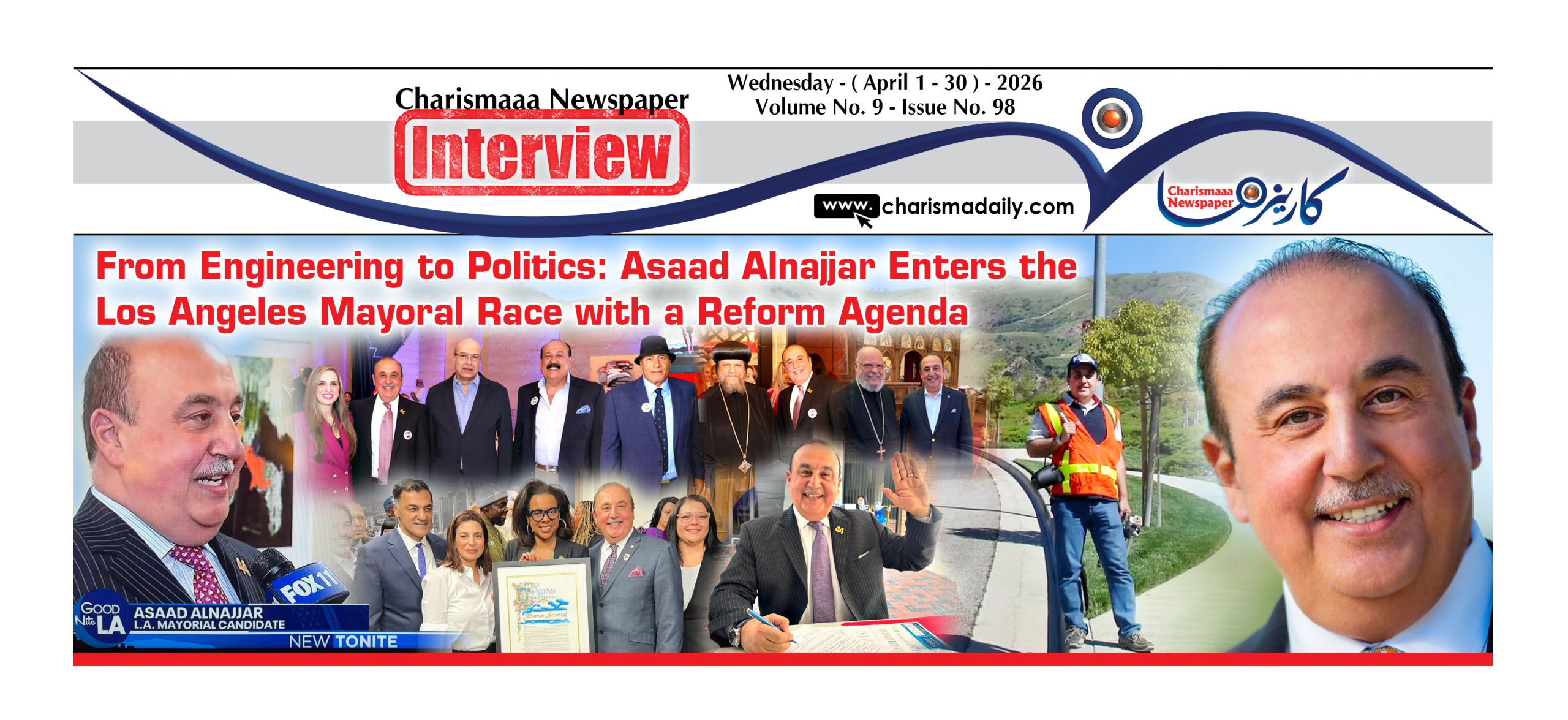
1- To help our readers learn more about your personal and professional journey, could you tell us when you first arrived in the United States and how old you were at the time? What were your early experiences like as you began building your life here? We would also like to know about your family how many children do you have and how your journey with engineering began. Was engineering a field you always intended to pursue, and did you study it in the United States or in your home country?
I arrived in Los Angeles in 1982, just around my 18th birthday, to begin my academic journey at USC. From my bachelor’s degree through to higher education, every step was a deliberate move toward building my future and opening doors to new opportunities.
I am married to Areij, a civil engineer for the City of Los Angeles. We have two daughters, Hiba and Huda, who are currently pursuing their studies at UCLA and USC.
My lifelong fascination with engineering led me to pursue Civil and Structural Engineering at USC. My career with the City of Los Angeles has allowed me to play an integral role on design-build teams, where I’ve worked on everything from street lighting and traffic systems to the expansion of rapid buses and light rail.
2- After more than 35 years of engineering service with the City of Los Angeles, what motivated you to run for Mayor at this time?
My ambition to run for Mayor of Los Angeles first took root in 1989, when I joined the City with a mission to serve our community and elevate our standard of living.
Over the years, alongside my engineering career, I have dedicated myself to public service by volunteering with LAPD and LAFD safety committees, serving on Neighborhood Councils, and leading initiatives for various non-profit organizations. For the past 11 years, I have also been a bridge-builder in the interfaith community, working to unite temples, churches, and mosques through shared faith.
This unique combination of technical expertise, civic leadership, and community advocacy has provided me with the diverse qualifications necessary to lead our city as Mayor.
3-Based on your extensive experience managing infrastructure and transit projects in Los Angeles, what do you consider the city’s most pressing challenges today?
We are witnessing the consequences of fiscal mismanagement. The leadership’s inability to address the budget crisis has created an unstable environment, forcing our most experienced personnel into early retirement or toward the private sector. This ‘brain drain’ has left the city dangerously understaffed, with a remaining workforce that is overwhelmed and stretched thin by a workload that has doubled under this administration’s watch.
4- Homelessness has become one of the most critical issues in Los Angeles. What is your realistic plan to address this crisis?
Los Angeles doesn’t need a new study; we need a leader who will actually use the tools we already have. Since 2015, a 277-page master plan has existed to tackle homelessness through specialized care for families and those battling addiction. Beverly Hills, Culver City, Burbank, and Irvine have all looked to these strategies to manage their own crises, yet in Los Angeles, this roadmap remains on the shelf while our streets continue to suffer.
5- With the upcoming Los Angeles 2028 Olympic Games, how should the city upgrade its infrastructure to be fully prepared for this global event?
Our current infrastructure is an aging system that has suffered from years of deferred maintenance. Because we’ve failed to keep up with basic repairs, we now face an inflated budget just to bring our streets, sidewalks, trees, and lighting back to an acceptable standard. This neglect extends to our parking facilities, transit systems, and utilities.
The reality is that the city cannot fund these massive upgrades alone. The only viable solution to prepare for LA28 is to leverage Public-Private Partnerships (P3s). By bringing in private investment, we can modernize our infrastructure and deliver a world-class experience for the Olympics and beyond.
6- How can the City of Los Angeles better support small and medium-sized businesses that form the backbone of the local economy?
For me small and medium-sized businesses are the backbone of the economy in Los Angeles. They create local jobs, sustain neighborhood culture, and drive economic mobility across communities. Policies that reduce barriers, expand access to capital, and increase local demand can significantly strengthen this sector. Programs already exist such as the city’s Business Source Centers that offer free consulting, training, and permitting help but many businesses still struggle with high costs, regulatory complexity, and access to financing.
7- Having worked for decades in engineering and technology-driven city projects, how do you see innovation and smart technology shaping the future of urban management?
I view innovation and smart technology as tools for “re-engineering” Los Angeles into a safer, more efficient “city of the future”. My vision, “Engineering a Stronger Los Angeles,” emphasizes transitioning from political management to technical precision. For 3 decades I have introduced and constructed advanced traffic systems, automated lighting systems with incorporated environmental monitoring systems.
Automation is the future to facilitate a safe technologically advance smart city.
8- Public safety and crime remain key concerns for Angelenos. What is your vision for balancing public safety with social justice?
As a mayoral candidate my vision for public safety is built on a “Public Safety First” philosophy that integrates social justice through community accountability, immigrant protection, and expanded mental health services. I view public safety as a “fundamental right” and aims to move beyond political slogans toward measurable results.
For the past 25 years I have been volunteering for safety committees for LAPD and LAFD and have participated in many community training venues.
9-Los Angeles is one of the most diverse cities in the world. How can city leadership strengthen unity and cooperation among its diverse communities?
I will continue my ongoing efforts the past 4 decades in which I participate & organize cultural events, interfaith venues and youth diversity integration.
10- What message would you like to share with young people in Los Angeles regarding education, career opportunities, and professional development?
The message is very clear to enhance advanced training internships, establish multi-lingual education centers and encourage the youth to be involved in the local politics in addition to the professional career development.
11- How do you envision the future of Los Angeles over the next decade if your vision and policies are implemented?
Under my administration I will first apply an extensive 277 page plan to address homelessness that will result in enhanced Neighborhood Safety. Once this is implemented our businesses and offices will flourish specially the movies industry that has demolished under the current administration. There will be zero tolerance for discrimination.
12- With the rising cost of living in California, many middle-class families are leaving the state. What policies would you pursue to help retain residents and strengthen the middle class in Los Angeles?
As a mayor I will encourage the building of affordable housing that has been delayed for decades. Also, I will implement bonuses and incentives to help small businesses grow and get back on their feet to benefit the local economy.
13- You come from Iraqi Arab roots. How have your cultural and heritage background influenced your vision of public service and community engagement in the United States?
My roots gave me the spirit to carry the community belonging message and to unite among other communities to serve as one diversified Angeleno group. The richness of the Arab Heritage in medicine, math, science, law and other aspects of services gave me the tools to be top leader representing our community at the decision making tables.
14- If elected Mayor of Los Angeles, what would be the top priorities you plan to focus on during your first year in office?
As a civil structural engineer with over 36 years of public service in Los Angeles, I am running for Mayor in 2026 under the vision of “Engineering a Stronger Los Angeles”. My platform emphasizes replacing political posturing with technical precision, fiscal accountability, and practical, data-driven immediate solutions to city operations.
Before I can tackle and resolve issues related to Homelessness, Immigration right and small business support and other important issues my top 3 priorities would be:-
Based on my three core pillars aimed at modernizing city management and restoring public trust:
1) Fiscal Accountability & 90-Day Audit: I pledge to immediately audit and rebalance the city budget, shifting funds from “vanity projects” to essential services like sanitation, traffic relief, and public safety.
2) Public Safety & Emergency Preparedness: My plan focuses on fully equipping first responders (Civilian & Sworn personnel) and utilizing his engineering background to modernize wildfire prevention and disaster response systems.
3) Infrastructure Modernization: Leveraging my technical expertise, as I aim to fast-track sidewalk and pothole repairs, upgrade to solar LED street lighting, copper wire theft prevention measures and streamline building permits for affordable housing.
15- How do you view the role of the media in educating the public, raising awareness of key issues, and helping guide public opinion toward what best serves the interests of society?
The global media in general and specially the media in the USA plays a great role in outreach and does directly control the output in advance. Thus far unfortunately the Arab community is under served by the USA media and doesn’t provide any support. So far the only available venue for the Arab Community is to use Arab media for outreach.
16- In this context, how do you evaluate the role played by Charisma Newspaper in providing media, informational, and educational services to the Egyptian and Arab communities, while also strengthening their connection with the broader American society?
Charisma is playing a leading role to carry the voice of the Arab community in the USA and hopefully will be the bridge to get our campaigns and community messages to the local USA media. So far we are the ignored orphan of this society and we as a community must support Charisma to ensure its success.
17- What message would you like to deliver to members of the Arab community in Los Angeles and across California, particularly regarding civic participation and community engagement?
Unfortunately today our community in general is not involved in civic participation and lacks the organization to support Arab candidates. We have few religious based organizations that encourages limited numbers to be involved in politics but no real path to success is established. What I tell the community is go out and vote to the best candidate you feel will serve our community and set the ground for our youth to be an active part of the decision making table.
18- To what extent do you believe that the participation of immigrants and diverse diaspora communities contributes to the development of political and economic life in major American cities?
My campaign motto has been United Through Diversity as this path will have me bring together all the little islands of communities to build a coalition of a Los Angeles for all main land of opportunity for us now and to our youth and future generations. Without loyalty to the sense of belonging we will not exist here and we will always be challenged for our rights and freedoms.
In closing, Charisma Newspaper extends its sincere appreciation to Engineer Asaad Y. Alnajjar for joining us in this special interview and for sharing his insights and vision with our readers regarding the future of the City of Los Angeles and the challenges it faces in the years ahead.
This conversation reflects a professional journey spanning more than three decades of public service within the city’s engineering and infrastructure systems. Through this experience, Alnajjar presents a practical vision for Los Angeles focused on strengthening infrastructure, improving public safety, addressing homelessness, supporting small businesses, and preparing the city for major global events such as the Los Angeles 2028 Olympic Games.
At Charisma, we believe that engaging with civic leaders and decision-makers provides readers with valuable perspectives on the ideas and policies shaping the future of our communities. As the upcoming election approaches, dialogues like this serve as an important platform for constructive discussion and democratic engagement in a city defined by diversity, opportunity, and shared ambition.