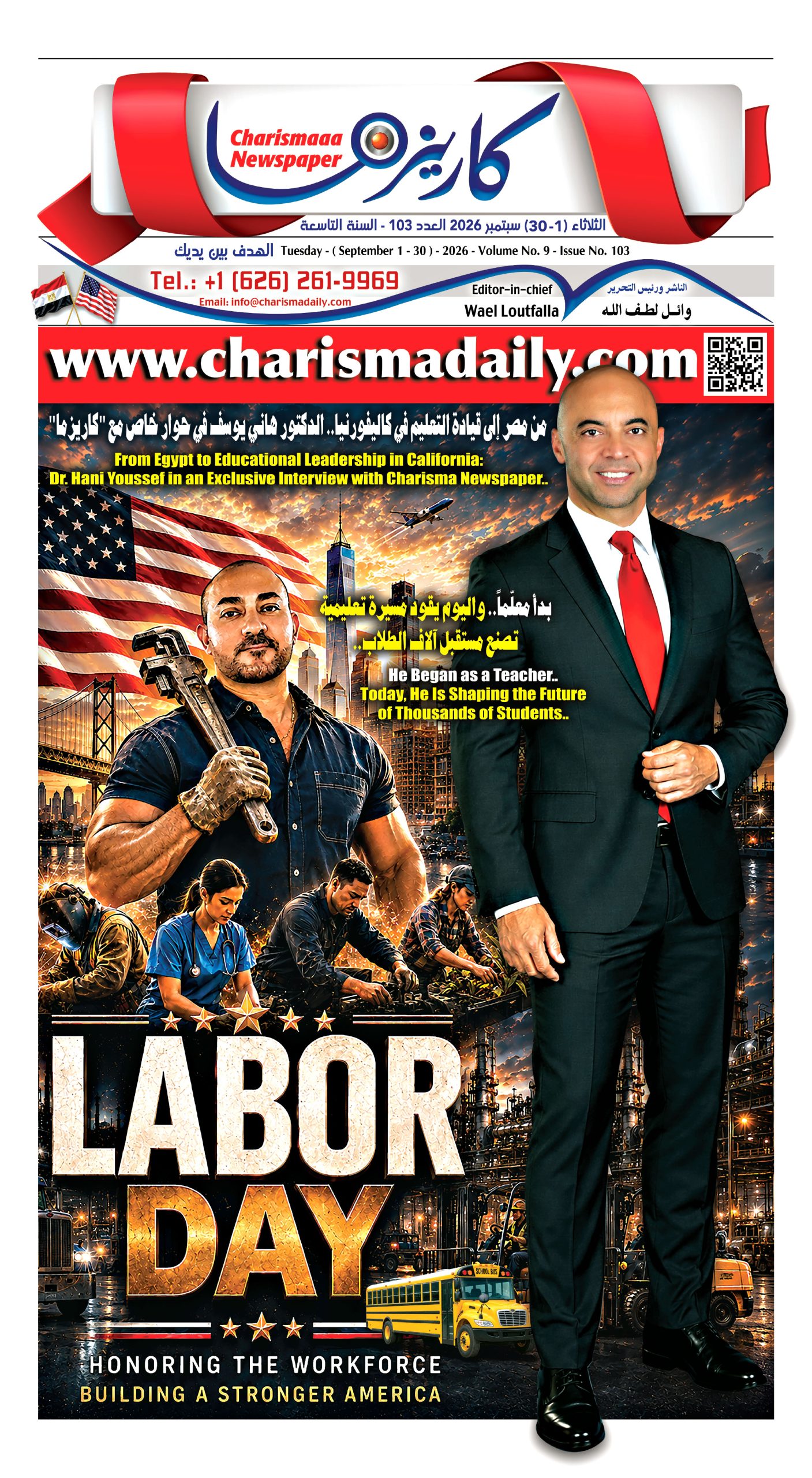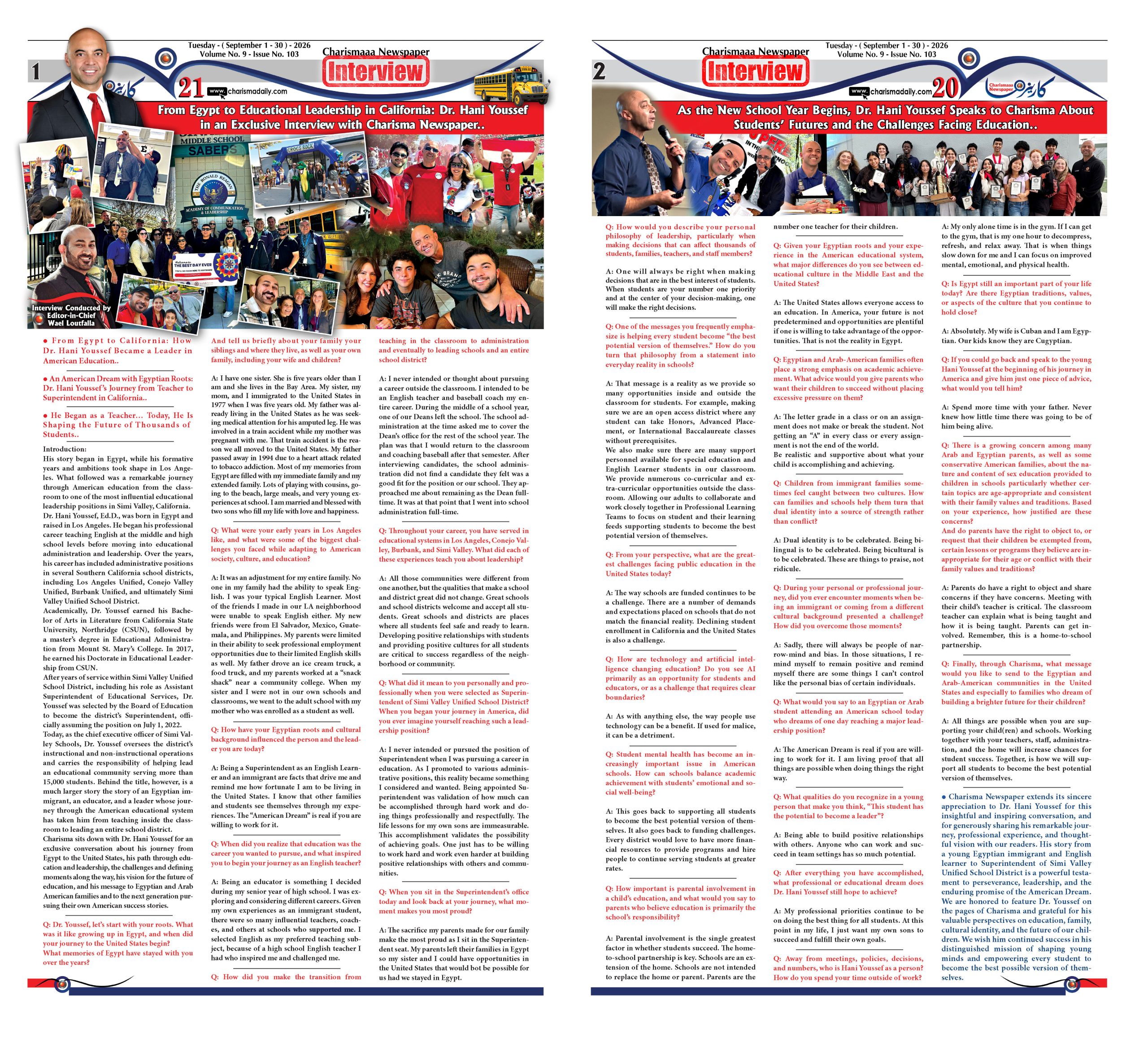

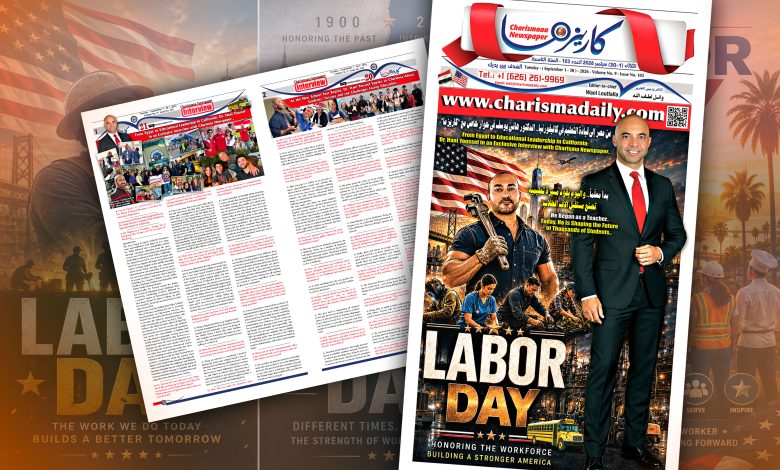
● As the New School Year Begins, Dr. Hani Youssef Speaks to Charisma About Students’ Futures and the Challenges Facing Education..
● From Egypt to California: How Dr. Hani Youssef Became a Leader in American Education..
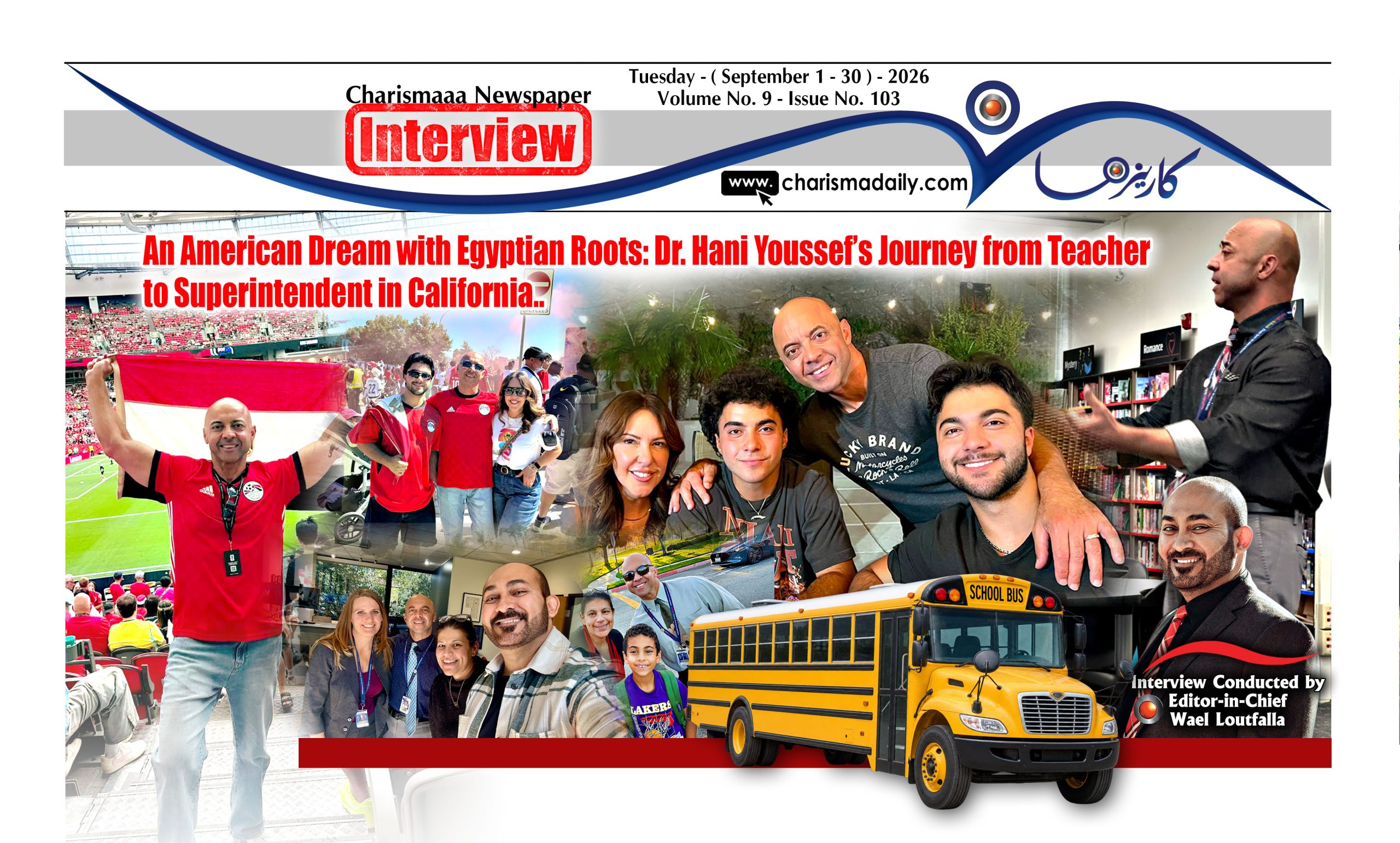
● An American Dream with Egyptian Roots: Dr. Hani Youssef’s Journey from Teacher to Superintendent in California..
● He Began as a Teacher… Today, He Is Shaping the Future of Thousands of Students..
Introduction:
His story began in Egypt, while his formative years and ambitions took shape in Los Angeles. What followed was a remarkable journey through American education from the classroom to one of the most influential educational leadership positions in Simi Valley, California.
Dr. Hani Youssef, Ed.D., was born in Egypt and raised in Los Angeles. He began his professional career teaching English at the middle and high school levels before moving into educational administration and leadership. Over the years, his career has included administrative positions in several Southern California school districts, including Los Angeles Unified, Conejo Valley Unified, Burbank Unified, and ultimately Simi Valley Unified School District.
Academically, Dr. Youssef earned his Bachelor of Arts in Literature from California State University, Northridge (CSUN), followed by a master’s degree in Educational Administration from Mount St. Mary’s College. In 2017, he earned his Doctorate in Educational Leadership from CSUN.
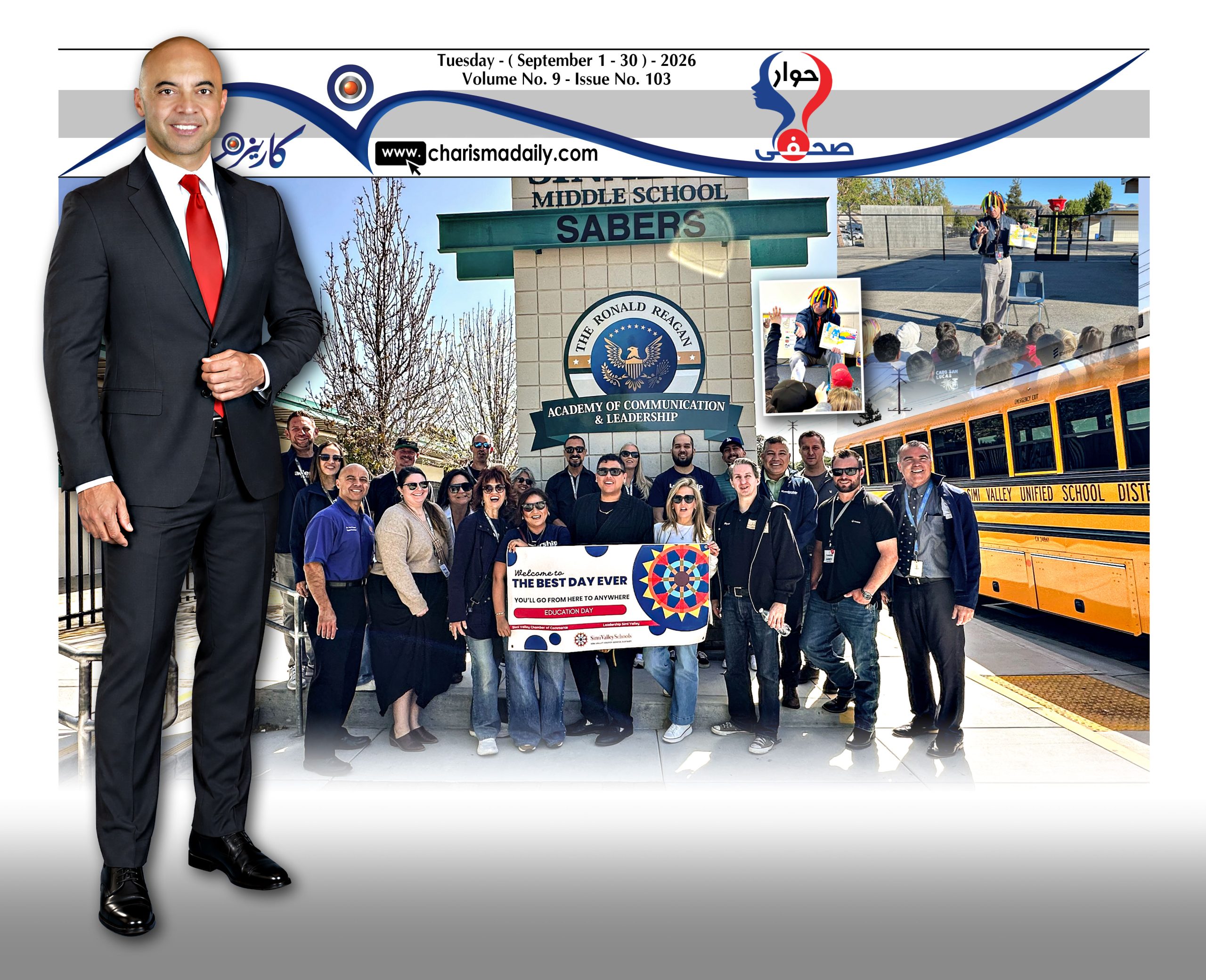
After years of service within Simi Valley Unified School District, including his role as Assistant Superintendent of Educational Services, Dr. Youssef was selected by the Board of Education to become the district’s Superintendent, officially assuming the position on July 1, 2022.
Today, as the chief executive officer of Simi Valley Schools, Dr. Youssef oversees the district’s instructional and non-instructional operations and carries the responsibility of helping lead an educational community serving more than 15,000 students. Behind the title, however, is a much larger story the story of an Egyptian immigrant, an educator, and a leader whose journey through the American educational system has taken him from teaching inside the classroom to leading an entire school district.
Charisma sits down with Dr. Hani Youssef for an exclusive conversation about his journey from Egypt to the United States, his path through education and leadership, the challenges and defining moments along the way, his vision for the future of education, and his message to Egyptian and Arab American families and to the next generation pursuing their own American success stories.
Q: Dr. Youssef, let’s start with your roots. What was it like growing up in Egypt, and when did your journey to the United States begin? What memories of Egypt have stayed with you over the years? And tell us briefly about your family your siblings and where they live, as well as your own family, including your wife and children?
A: I have one sister. She is five years older than I am and she lives in the Bay Area. My sister, my mom, and I immigrated to the United States in 1977 when I was five years old. My father was already living in the United States as he was seeking medical attention for his amputed leg. He was involved in a train accident while my mother was pregnant with me. That train accident is the reason we all moved to the United States. My father passed away in 1994 due to a heart attack related to tobacco addiction. Most of my memories from Egypt are filled with my immediate family and my extended family. Lots of playing with cousins, going to the beach, large meals, and very young experiences at school. I am married and blessed with two sons who fill my life with love and happiness.
Q: What were your early years in Los Angeles like, and what were some of the biggest challenges you faced while adapting to American society, culture, and education?
A: It was an adjustment for my entire family. No one in my family had the ability to speak English. I was your typical English Learner. Most of the friends I made in our LA neighborhood were unable to speak English either. My new friends were from El Salvador, Mexico, Guatemala, and Philippines. My parents were limited in their ability to seek professional employment opportunities due to their limited English skills as well. My father drove an ice cream truck, a food truck, and my parents worked at a “snack shack” near a community college. When my sister and I were not in our own schools and classrooms, we went to the adult school with my mother who was enrolled as a student as well.
Q: How have your Egyptian roots and cultural background influenced the person and the leader you are today?
A: Being a Superintendent as an English Learner and an immigrant are facts that drive me and remind me how fortunate I am to be living in the United States. I know that other families and students see themselves through my experiences. The “American Dream” is real if you are willing to work for it.
Q: When did you realize that education was the career you wanted to pursue, and what inspired you to begin your journey as an English teacher?
A: Being an educator is something I decided during my senior year of high school. I was exploring and considering different careers. Given my own experiences as an immigrant student, there were so many influential teachers, coaches, and others at schools who supported me. I selected English as my preferred teaching subject, because of a high school English teacher I had who inspired me and challenged me.
Q: How did you make the transition from teaching in the classroom to administration and eventually to leading schools and an entire school district?
A: I never intended or thought about pursuing a career outside the classroom. I intended to be an English teacher and baseball coach my entire career. During the middle of a school year, one of our Deans left the school. The school administration at the time asked me to cover the Dean’s office for the rest of the school year. The plan was that I would return to the classroom and coaching baseball after that semester. After interviewing candidates, the school administration did not find a candidate they felt was a good fit for the position or our school. They approached me about remaining as the Dean full-time. It was at that point that I went into school administration full-time.
Q: Throughout your career, you have served in educational systems in Los Angeles, Conejo Valley, Burbank, and Simi Valley. What did each of these experiences teach you about leadership?
A: All those communities were different from one another, but the qualities that make a school and district great did not change. Great schools and school districts welcome and accept all students. Great schools and districts are places where all students feel safe and ready to learn. Developing positive relationships with students and providing positive cultures for all students are critical to success regardless of the neighborhood or community.
Q: What did it mean to you personally and professionally when you were selected as Superintendent of Simi Valley Unified School District? When you began your journey in America, did you ever imagine yourself reaching such a leadership position?
A: I never intended or pursued the position of Superintendent when I was pursuing a career in education. As I promoted to various administrative positions, this reality became something I considered and wanted. Being appointed Superintendent was validation of how much can be accomplished through hard work and doing things professionally and respectfully. The life lessons for my own sons are immeasurable. This accomplishment validates the possibility of achieving goals. One just has to be willing to work hard and work even harder at building positive relationships with others and communities.
Q: When you sit in the Superintendent’s office today and look back at your journey, what moment makes you most proud?
A: The sacrifice my parents made for our family make the most proud as I sit in the Superintendent seat. My parents left their families in Egypt so my sister and I could have opportunities in the United States that would bot be possible for us had we stayed in Egypt.
Q: How would you describe your personal philosophy of leadership, particularly when making decisions that can affect thousands of students, families, teachers, and staff members?
A: One will always be right when making decisions that are in the best interest of students. When students are your number one priority and at the center of your decision-making, one will make the right decisions.
Q: One of the messages you frequently emphasize is helping every student become “the best potential version of themselves.” How do you turn that philosophy from a statement into everyday reality in schools?
A: That message is a reality as we provide so many opportunities inside and outside the classroom for students. For example, making sure we are an open access district where any student can take Honors, Advanced Placement, or International Baccalaureate classes without prerequisites.
We also make sure there are many support personnel available for special education and English Learner students in our classroom. We provide numerous co-curricular and extra-curricular opportunities outside the classroom. Allowing our adults to collaborate and work closely together in Professional Learning Teams to focus on student and their learning feeds supporting students to become the best potential version of themselves.
Q: From your perspective, what are the greatest challenges facing public education in the United States today?
A: The way schools are funded continues to be a challenge. There are a number of demands and expectations placed on schools that do not match the financial reality. Declining student enrollment in California and the United States is also a challenge.
Q: How are technology and artificial intelligence changing education? Do you see AI primarily as an opportunity for students and educators, or as a challenge that requires clear boundaries?
A: As with anything else, the way people use technology can be a benefit. If used for malice, it can be a detriment.
Q: Student mental health has become an increasingly important issue in American schools. How can schools balance academic achievement with students’ emotional and social well-being?
A: This goes back to supporting all students to become the best potential version of themselves. It also goes back to funding challenges. Every district would love to have more financial resources to provide programs and hire people to continue serving students at greater rates.
Q: How important is parental involvement in a child’s education, and what would you say to parents who believe education is primarily the school’s responsibility?
A: Parental involvement is the single greatest factor in whether students succeed. The home-to-school partnership is key. Schools are an extension of the home. Schools are not intended to replace the home or parent. Parents are the number one teacher for their children.
Q: Given your Egyptian roots and your experience in the American educational system, what major differences do you see between educational culture in the Middle East and the United States?
A: The United States allows everyone access to an education. In America, your future is not predetermined and opportunities are plentiful if one is willing to take advantage of the opportunities. That is not the reality in Egypt.
Q: Egyptian and Arab-American families often place a strong emphasis on academic achievement. What advice would you give parents who want their children to succeed without placing excessive pressure on them?
A: The letter grade in a class or on an assignment does not make or break the student. Not getting an “A” in every class or every assignment is not the end of the world.
Be realistic and supportive about what your child is accomplishing and achieving.
Q: Children from immigrant families sometimes feel caught between two cultures. How can families and schools help them turn that dual identity into a source of strength rather than conflict?
A: Dual identity is to be celebrated. Being bilingual is to be celebrated. Being bicultural is to be celebrated. These are things to praise, not ridicule.
Q: During your personal or professional journey, did you ever encounter moments when being an immigrant or coming from a different cultural background presented a challenge? How did you overcome those moments?
A: Sadly, there will always be people of narrow-mind and bias. In those situations, I remind myself to remain positive and remind myself there are some things I can’t control like the personal bias of certain individuals.
Q: What would you say to an Egyptian or Arab student attending an American school today who dreams of one day reaching a major leadership position?
A: The American Dream is real if you are willing to work for it. I am living proof that all things are possible when doing things the right way.
Q: What qualities do you recognize in a young person that make you think, “This student has the potential to become a leader”?
A: Being able to build positive relationships with others. Anyone who can work and succeed in team settings has so much potential.
Q: After everything you have accomplished, what professional or educational dream does Dr. Hani Youssef still hope to achieve?
A: My professional priorities continue to be on doing the best thing for all students. At this point in my life, I just want my own sons to succeed and fulfill their own goals.
Q: Away from meetings, policies, decisions, and numbers, who is Hani Youssef as a person? How do you spend your time outside of work?
A: My only alone time is in the gym. If I can get to the gym, that is my one hour to decompress, refresh, and relax away. That is when things slow down for me and I can focus on improved mental, emotional, and physical health.
Q: Is Egypt still an important part of your life today? Are there Egyptian traditions, values, or aspects of the culture that you continue to hold close?
A: Absolutely. My wife is Cuban and I am Egyptian. Our kids know they are Cugyptian.
Q: If you could go back and speak to the young Hani Youssef at the beginning of his journey in America and give him just one piece of advice, what would you tell him?
A: Spend more time with your father. Never knew how little time there was going to be of him being alive.
Q: There is a growing concern among many Arab and Egyptian parents, as well as some conservative American families, about the nature and content of sex education provided to children in schools particularly whether certain topics are age-appropriate and consistent with their family values and traditions. Based on your experience, how justified are these concerns?
And do parents have the right to object to, or request that their children be exempted from, certain lessons or programs they believe are inappropriate for their age or conflict with their family values and traditions?
A: Parents do have a right to object and share concerns if they have concerns. Meeting with their child’s teacher is critical. The classroom teacher can explain what is being taught and how it is being taught. Parents can get involved. Remember, this is a home-to-school partnership.
Q: Finally, through Charisma, what message would you like to send to the Egyptian and Arab-American communities in the United States and especially to families who dream of building a brighter future for their children?
A: All things are possible when you are supporting your child(ren) and schools. Working together with your teachers, staff, administration, and the home will increase chances for student success. Together, is how we will support all students to become the best potential version of themselves.
● Charisma Newspaper extends its sincere appreciation to Dr. Hani Youssef for this insightful and inspiring conversation, and for generously sharing his remarkable journey, professional experience, and thoughtful vision with our readers. His story from a young Egyptian immigrant and English learner to Superintendent of Simi Valley Unified School District is a powerful testament to perseverance, leadership, and the enduring promise of the American Dream.
We are honored to feature Dr. Youssef on the pages of Charisma and grateful for his valuable perspectives on education, family, cultural identity, and the future of our children. We wish him continued success in his distinguished mission of shaping young minds and empowering every student to become the best possible version of themselves.