AI Looks Beyond the Mammogram: MIT Model Predicts Breast Cancer Risk Years in Advance
2 days ago
10 4 minutes read
Mirai analyzes mammograms to estimate a woman’s risk of developing breast cancer over the next five years, opening new possibilities for more personalized screening and earlier intervention
Charisma – Health & Science
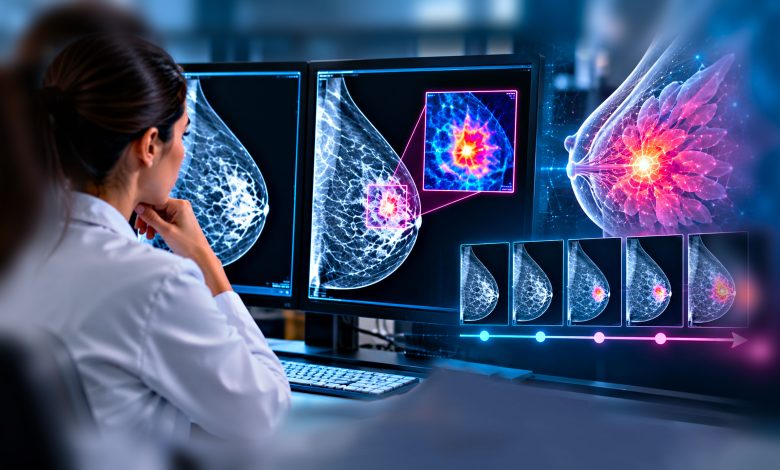
Artificial intelligence is giving the traditional mammogram a potentially powerful new role. Instead of using breast images solely to look for signs of cancer that may already be present, researchers are developing AI systems capable of analyzing a mammogram to estimate a woman’s future risk of developing breast cancer years before a diagnosis is made.
Researchers from the Massachusetts Institute of Technology (MIT), working with Massachusetts General Hospital and other institutions, developed an artificial intelligence model known as Mirai, a deep-learning system designed to analyze mammography images and calculate a personalized breast cancer risk for each of the following five years.
MIT researchers say the model was specifically designed to predict risk at multiple future time points while maintaining consistent performance across different patient populations and clinical settings.
What Can AI See in a Mammogram?
Traditional breast cancer risk models often rely on factors such as age, family history, hormonal factors, genetics and breast density.
Mirai takes a different approach. It extracts information directly from mammography images and uses deep learning to identify imaging patterns associated with a patient’s future risk.
According to MIT, mammograms contain a considerable amount of health information. Mirai analyzes representations from the different mammographic views and combines them to estimate a patient’s risk of developing breast cancer for each year over the following five years.
However, there is an important distinction: Mirai does not necessarily detect an existing hidden tumor five years before doctors can see it.
Instead, the system analyzes a current mammogram to estimate the likelihood that the patient will subsequently be diagnosed with breast cancer. In other words, it is primarily a risk-prediction tool rather than a cancer diagnosis by itself.
More Than 62,000 Women Studied:
One of the strongest evaluations of Mirai was published in the peer-reviewed Journal of Clinical Oncology.
Researchers evaluated the model using 128,793 mammograms from 62,185 patients across seven medical institutions in five countries. Among those patients, 3,815 were subsequently diagnosed with breast cancer within five years.
The participating institutions included Massachusetts General Hospital, Novant Health and Emory in the United States, Maccabi-Assuta in Israel, Karolinska in Sweden, Chang Gung Memorial Hospital in Taiwan and Barretos in Brazil.
The study found that Mirai maintained predictive performance across the internationally diverse test populations. Researchers described the study at the time as the broadest multi-institutional validation of an AI-based breast cancer risk model.
Why Could This Matter?
The potential importance of the technology lies not in replacing radiologists, but in helping doctors determine who may require closer surveillance.
More accurate individualized risk assessment could eventually help clinicians tailor breast cancer screening. Women identified as being at higher risk might benefit from different screening schedules or additional imaging, while women at lower risk could potentially avoid unnecessary testing and the anxiety and costs associated with false-positive results.
MIT researchers have said that improved risk models could enable more targeted screening strategies aimed at achieving earlier detection while reducing unnecessary screening and overtreatment.
Tested on Millions of Mammograms
Mirai’s development has continued beyond its initial studies.
MIT Jameel Clinic currently reports that the technology has been validated on more than 2.7 million mammograms, with the project involving 115 hospitals across 29 countries.
The initiative has expanded internationally in an effort to test whether the model can maintain its performance across different populations and healthcare environments, including hospitals serving under-resourced regions.
Prediction — Not Certainty
Despite the promising results, the distinction between risk prediction and diagnosis remains essential.
A high-risk score from an AI model does not mean that a woman will definitely develop breast cancer, just as a lower-risk prediction cannot guarantee that she will remain cancer-free.
The technology is therefore best understood as another potential tool for physicians one designed to extract additional risk information from mammograms and potentially support more individualized screening decisions.
Mirai also does not eliminate the need for established breast cancer screening, professional interpretation of mammograms or appropriate medical follow-up.
A New Role for the Mammogram
The scientific significance of Mirai lies in a fundamental change in how a mammogram can potentially be used.
Rather than asking only, “Is there cancer visible in this image today?”, artificial intelligence may help physicians ask an additional question:
“What can this image tell us about this patient’s risk in the years ahead?”
If continuing clinical validation confirms that such models can be safely and effectively incorporated into routine care, AI-based risk assessment could become an important part of a more personalized approach to breast cancer screening giving doctors something particularly valuable in the fight against cancer: more information, earlier.
Original Sources:
Massachusetts Institute of Technology (MIT News)
“Robust artificial intelligence tools to predict future cancer,” January 28, 2021. MIT News – Original Report
Journal of Clinical Oncology / American Society of Clinical Oncology
“Multi-Institutional Validation of a Mammography-Based Breast Cancer Risk Model,” Adam Yala et al., Journal of Clinical Oncology, Vol. 40, No. 16, 2022. DOI: 10.1200/JCO.21.01337. Journal of Clinical Oncology – Original Scientific Study