


ArticlesU.S.AWorld

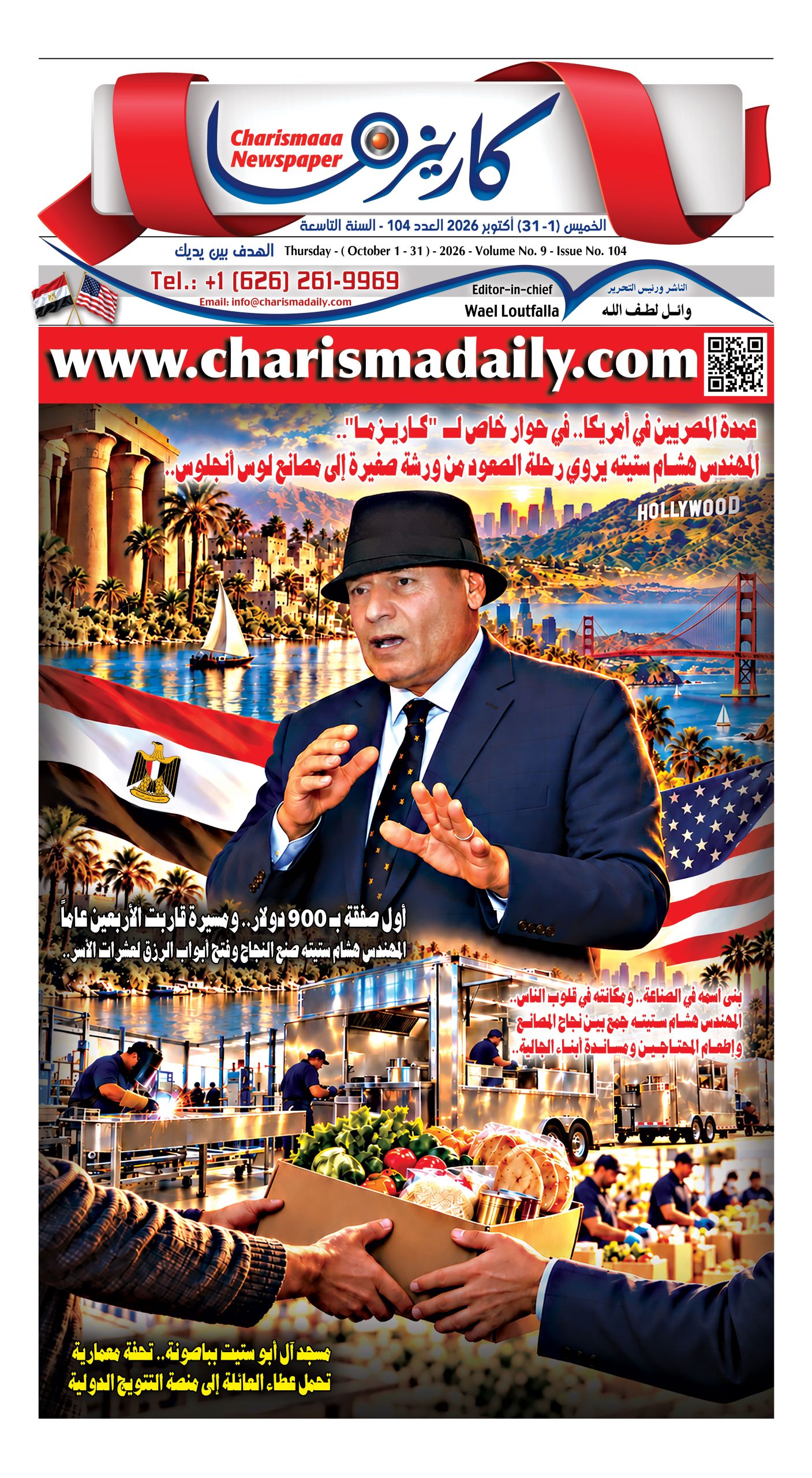
“The Mayor of Egyptians in America” in an Exclusive Interview with Charisma: Hesham Sitita Recounts His Rise from a Small Workshop to Factories in Los Angeles..

Interview Conducted by Editor-in-Chief Wael Loutfalla

● A $900 First Deal and a Journey Spanning Nearly Four Decades: Hesham Sitita Built His Success and Created Livelihoods for Dozens of Families.

● From Rowing Competitions to the World of Industry: Hesham Sitita Turned a Setback in His Sporting Dream into a Launchpad for His Future in America.

● The Abu Sitit Family Mosque in Basuna: An Architectural Masterpiece Bringing the Family’s Generosity to the International Awards Stage.

● From the Abu Sitit Family’s Roots in Sohag to the Factories of Los Angeles: Four Decades of Perseverance and Giving.

● He Built a Name in Industry and Earned a Place in People’s Hearts: Hesham Sitita Combined Industrial Success with Feeding Those in Need and Supporting His Community.

● Nearly 40 Families Depend Directly on His Businesses: Hesham Sitita’s Success Becomes a Source of Livelihood and a Responsibility.

Between the success he built with his own hands and the generosity he has chosen to extend to others lies the story of Egyptian engineer and businessman Hesham Sitita. Many in the Egyptian community call him “the Mayor of Egyptians in America” a reflection of his community presence, his closeness to people, and his readiness to stand beside those who turn to him. Over nearly four decades in the United States, he has built more than a substantial commercial and industrial enterprise. He has made his success a means of serving people and society, supporting the Egyptian and Arab communities, and helping those in need across American society, regardless of religion, nationality, or cultural background.


To understand this journey, one must return to its roots. Hesham Sitita belongs to the Abu Sitit family, one of the longstanding Hawwara families of Al-Balyana district in Egypt’s Sohag Governorate. Across successive generations, the family name has been associated with social standing, generosity, support for education, and service to the nation. From this upbringing, he carried into his life abroad the values of integrity, magnanimity, and mutual support, along with a belief that a person’s standing is measured not merely by what they possess, but by what they give to others and the difference they make in their lives.

A prominent figure in the family’s history is Hamid Bey Mohamed Shamandi Abu Sitit, regarded, according to the family’s oral history, as its founding patriarch. He headed the administration of Girga Province and served in one of the earliest parliamentary assemblies under Khedive Ismail, at a time when parliamentary service reflected social standing, public trust, and civic responsibility. His legacy, however, extended beyond the offices he held to patriotic acts that have remained part of the family’s collective memory.

According to this account, Hamid Bey Abu Sitit supported the Urabi Revolt of 1882, providing Ahmed Urabi’s army with 1,500 ardebs of grain, as well as horses and other assistance. As a consequence of his support, he was arrested and exiled to Sudan for approximately three years. His story endures in the family’s memory as an example of patriotism expressed through action and sacrifice.

The Abu Sitit family home brought together social standing and service to others. It included a mosque and a traditional Quranic school, with resources set aside to support students and the poor a tradition in which education, mutual support, and faith were closely intertwined. The family remained active in Egypt’s parliamentary and national life for decades, and several of its members were known for their involvement in the nationalist movement and the Wafd Party. The family account also recalls a visit by President Mohamed Naguib to their home in recognition of their patriotic history and positions, reflecting the standing they retained through Egypt’s political transformations.

Another expression of this heritage is the Abu Sitit Family Mosque in the village of Basuna, Sohag Governorate. The family’s name became closely associated with its construction, and the mosque emerged as both a place of worship and a distinctive Egyptian architectural landmark, attracting the attention of specialists and admirers beyond Egypt. Built through the family’s own contributions and those of local residents, it brought together a spirit of community participation and an ambition to create architecture that meets people’s needs and expresses their identity.

Construction took two years, following a design phase of approximately six months, guided by an architectural vision that blended the authenticity of tradition with a contemporary sensibility. The minaret, columns, mihrab, and pulpit were composed in visual harmony, adorned with the Beautiful Names of God. The dome, windows, and openings drew inspiration from Egypt’s history and the spirit of Islamic architecture, giving the mosque its distinctive character.

Its distinction extended beyond architectural beauty. The mosque incorporated practical engineering solutions, including a dome designed to allow natural airflow while limiting direct sunlight. Careful consideration was also given to making effective use of the main prayer hall, providing adjustable lighting, and installing movable partitions so the space could accommodate different needs. These efforts culminated in the mosque winning the Abdullatif Al Fozan Award for Mosque Architecture, in a competition that included 201 mosques from 48 countries adding a chapter of construction, craftsmanship, and generosity to the family’s history.

From this environment, where standing was tied to responsibility and success to service, Hesham Sitita began his American journey. He left Egypt behind, along with his family, his homeland, and his sporting career. A rowing champion, he had dreamed of representing his country in international competitions. When that dream faltered, his ambition endured. He sought a new field in which to build his future and found in industry and entrepreneurship another beginning worth working for.

The early days were far from easy. He started with very modest means in a small workshop in South Los Angeles, where the rent was no more than $75. His English was limited, his capital scarce, and his network of contacts still small. What he did have was practical skill and the determination to keep trying. He built his first food cart with his own hands, hitched it to his small Ford Festiva, and drove through the city’s streets in search of his first buyer.

His first sale brought in just $900. He chose to make that sum the foundation of his next step, reinvesting it in full in a welding machine and equipment for bending and shaping metal. Those two tools marked the beginnings of an enterprise he would continue developing over more than 36 years, relying on sustained hard work and reinvesting the proceeds of each stage to build the next.

From that workshop, Hesham Sitita founded Kareem Carts, which grew into one of the leading American companies specializing in the design and manufacture of food carts and food trucks. Over the years, his operations expanded to encompass factories, buildings, facilities, and authorized service centers. Together, they offer small business owners comprehensive support, beginning with the concept and design, continuing through manufacturing and equipment installation, and extending to assistance with health permits and the requirements for launching operations.

Behind the company’s name lies a family story. He initially chose “Kareem” in honor of his sister’s son. Later, after marrying, he named his own son Kareem Sitita. Today, Kareem shares in the company’s journey and carries forward his father’s work. Over time, the name has come to represent more than a brand: it also embodies the continuity of an enterprise whose responsibilities and future are shared by the family.

Family holds a central place in his account of success. A father of four daughters and one son, Kareem, he takes pride in the support his family has given him and recognizes the sacrifices they have shared throughout long years of struggle and work. He consistently emphasizes that his wife has been, and remains, the company’s financial and emotional backbone a true partner in its growth, expansion, and stability. Behind the long working hours and decisions that shaped the business was a family that shared the burdens of the journey and gave him reasons to persevere.

The economic impact of his work has reached well beyond his own family. His businesses have provided direct employment supporting approximately 40 families, in addition to dozens of others connected to the suppliers, companies, and service providers that work with his enterprises. The business has thus become a source of livelihood and stability for a broad network of employees and their families, making its continued success a responsibility toward everyone whose life has become connected to it.

That sense of responsibility also shapes the humanitarian side of the man known as “the Mayor of Egyptians in America.” He has put his resources and relationships to work for the community, opening his facilities to help people in need and support families facing difficult circumstances. Among the clearest expressions of this commitment is his ongoing participation in a free food distribution program every Saturday, working with the food bank to provide groceries and meals to individuals and families in need.

This work is a standing weekly commitment in his life, extending beyond seasonal occasions or a desire for visibility. It stems from his belief that feeding those in need and supporting others are moral and social responsibilities. Each weekly distribution reflects his conviction that generosity requires consistency as much as sincere intent.

His support also includes financial assistance for individuals and families facing emergencies, alongside emotional, personal, and psychological support during illness, bereavement, and financial hardship. He often works quietly to help resolve problems within the community, drawing on his experience and wide network of relationships to bridge differences, direct people to appropriate organizations, and stand beside them as they work through difficult circumstances.

Just as his family’s history in Sohag has been associated with support for places of worship and learning, his name in the United States has become linked to assistance for religious institutions and community centers. His contributions have included financial support, fundraising, and participation in construction and development projects. Among the most significant of these efforts has been his assumption of responsibilities connected with building and developing the Bilal Islamic Center and Mosque in Los Angeles, strengthening its role as a place of worship, education, community service, and connection.

Alongside his industrial and humanitarian work, Hesham Sitita serves in public life as Vice President of the General Union of Egyptians Abroad in the United States, under the leadership of businessman Raafat Salib. In this capacity, he participates in initiatives and events aimed at bringing the community together, engaging with Egyptian and American institutions, supporting Egyptians abroad and advocating for their interests, and strengthening their presence and influence within American society.

This role builds on a long history of community service and close engagement with people. He is known for his willingness to step in when needed and offer whatever financial, emotional, or practical assistance he can. He also takes part in official, religious, and national visits and gatherings that strengthen unity among Egyptians in the United States and preserve their ties to their homeland.

Throughout this journey, Hesham Sitita has combined the responsibilities of a businessman with the commitments of a community leader. He can be found in the factory among his employees, at the union among members of the community, at food distributions, in mosque and community center projects, and beside families who need assistance or a reassuring word. It is this sustained presence that has given the title “the Mayor of Egyptians in America” its meaning for those who know him and have witnessed his work.

His is the story of an immigrant who carried his Egyptian roots with him and built a sense of belonging in his new American homeland through work and participation. It is also the story of an ambition that began with a food cart and a $900 sale, then grew to encompass manufacturing, employment, and social and humanitarian responsibilities. Between the Abu Sitit family’s heritage in Sohag and his own journey in the United States, generosity remains the thread connecting past and present, giving success its broader meaning.

In this exclusive interview with Charisma Newspaper, Hesham Sitita opens his heart and shares his memories of a journey spanning nearly four decades from his family roots, his achievements in rowing, and his dream of representing Egypt, to immigration, his beginnings in a small workshop, and the founding of Kareem Carts.

He speaks about his wife, his four daughters, and his son Kareem; the principles and sacrifices behind his success; his responsibility toward dozens of families; his weekly commitment to food distribution; his contributions to building mosques and serving the community; his role in the General Union of Egyptians Abroad; and his vision for the community’s future and the next generations of Egyptians and Arabs in America.

Show More

Related Articles

Back to top button